
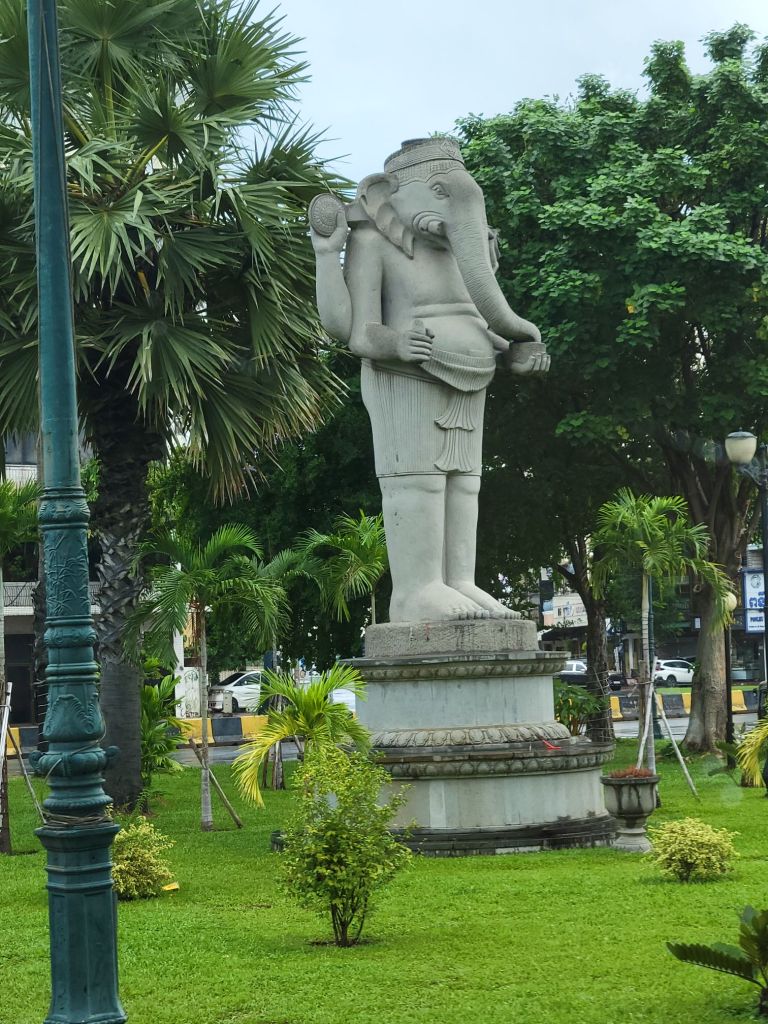
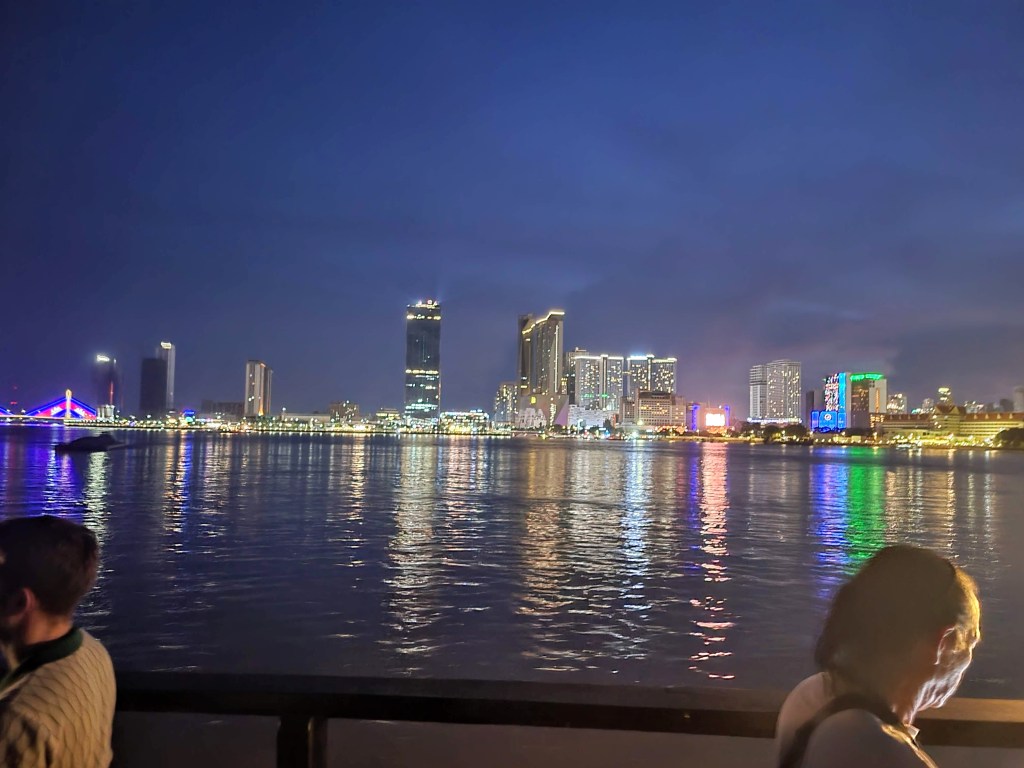
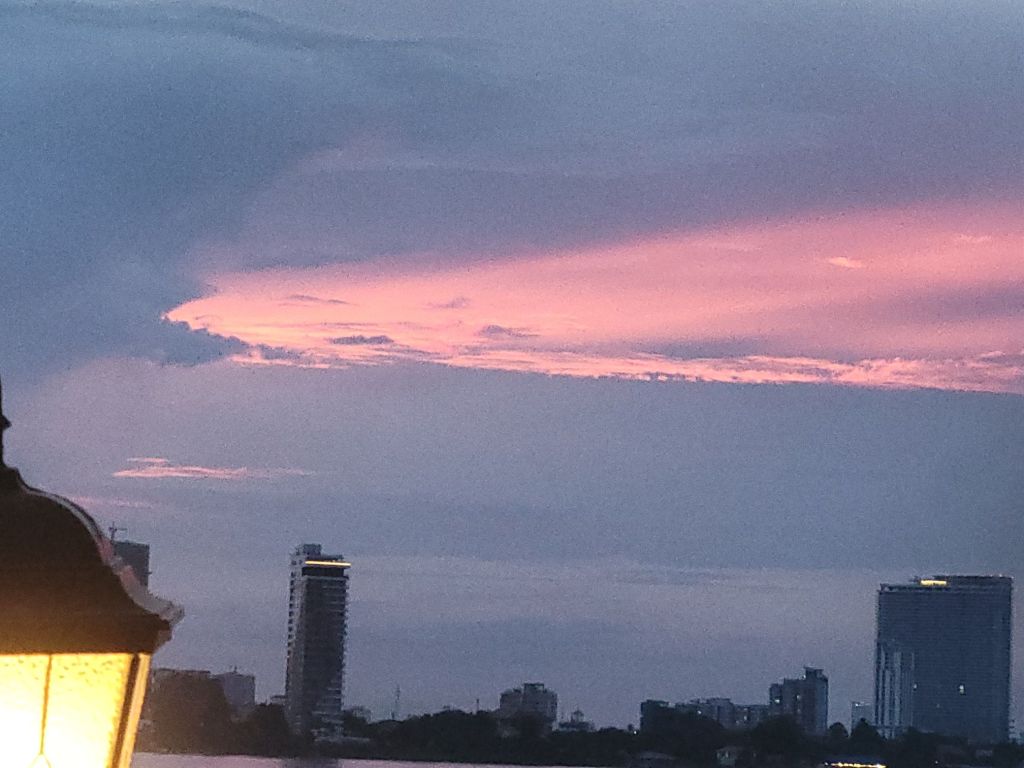
Cambodia celebrates Ancestors day for three days in September and our arrival fell during that time. Our experienced Leader and the Local guide immediately recommended other things we could do in place of our scheduled activity. The group agreed on a sunset cruise which turned out to be an excellent idea. Our first glimpse of Phonm Pen as we headed to our hotel.




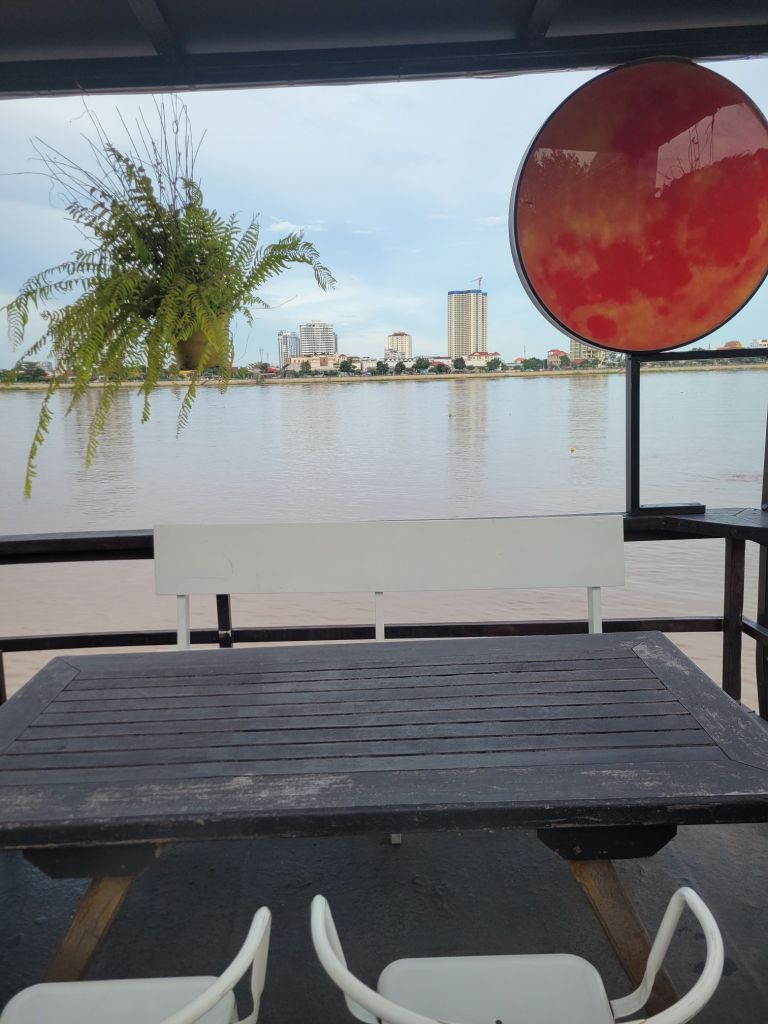
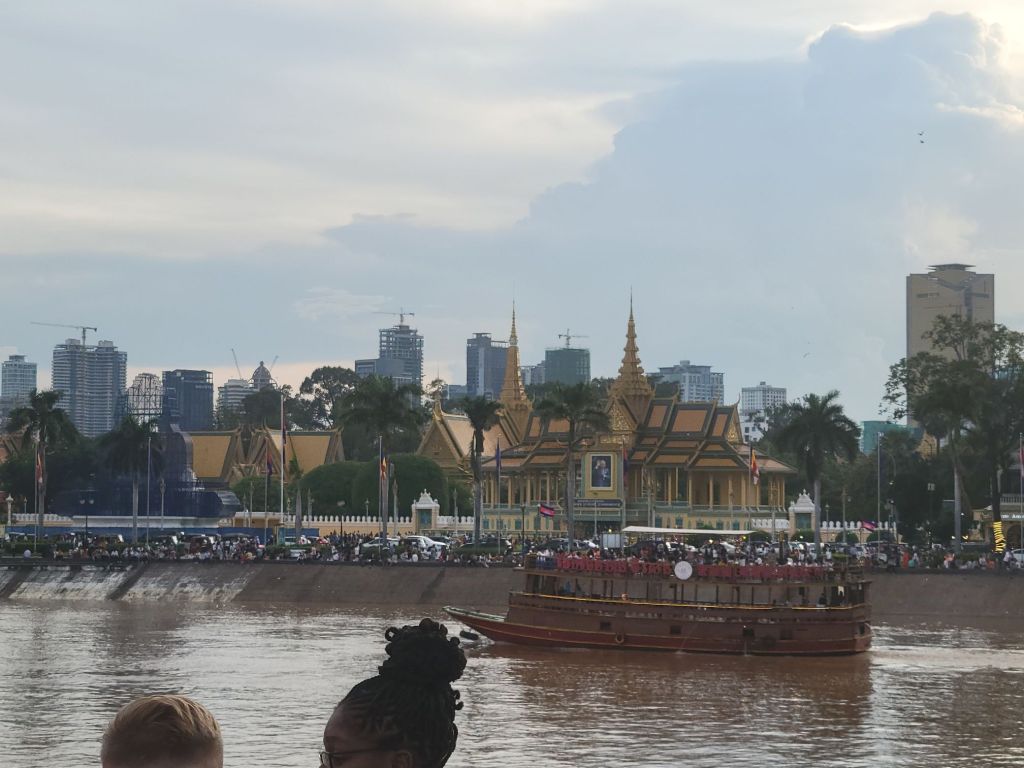
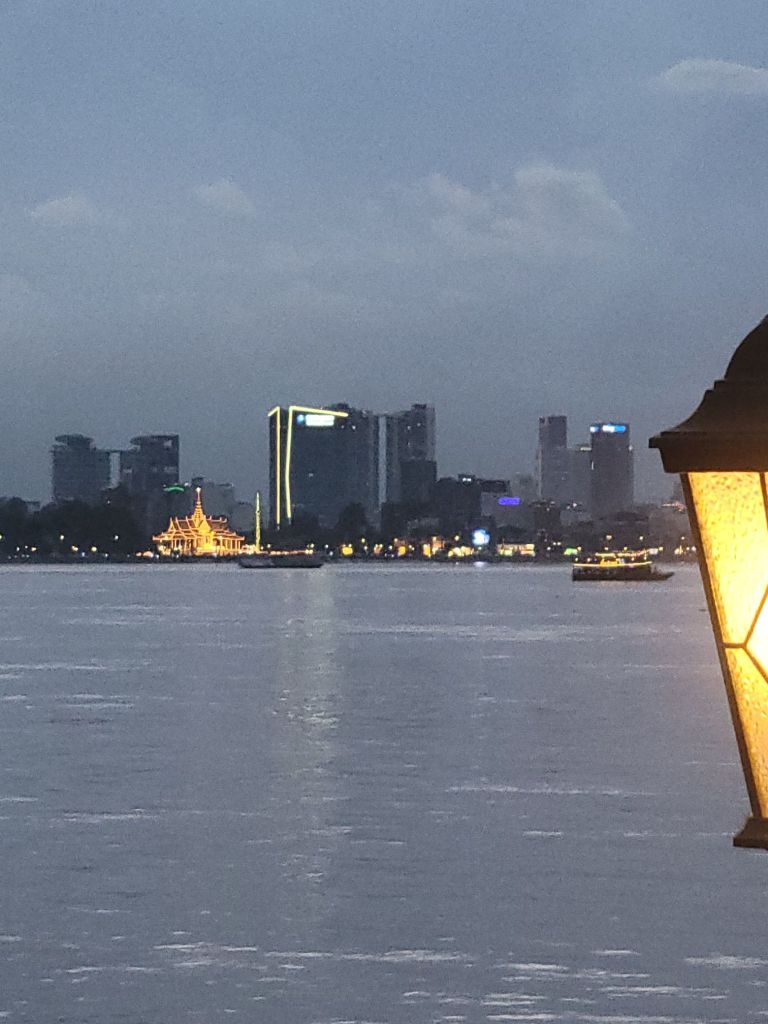
After checking in at our hotel and after a little rest time, we were ready for our cruise. The boat cruise cost about $20 and included unlimited beverages to include alcohol, beers etc. The tour was narrated so we were able to identify different points of interest in and around the harbor.





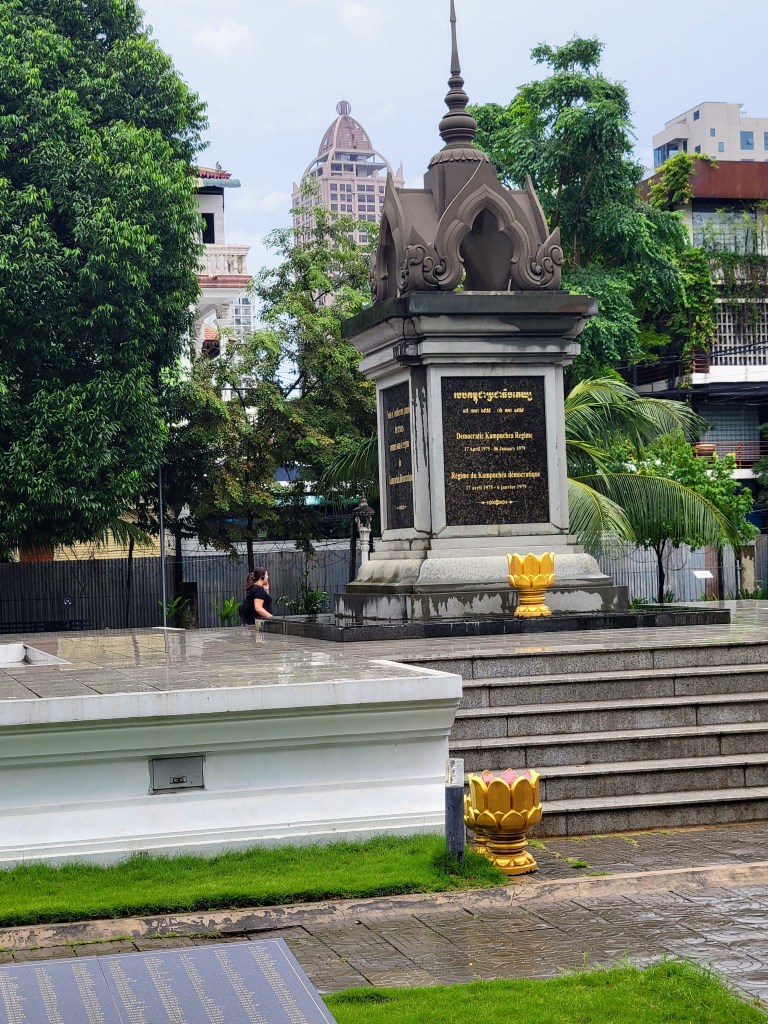
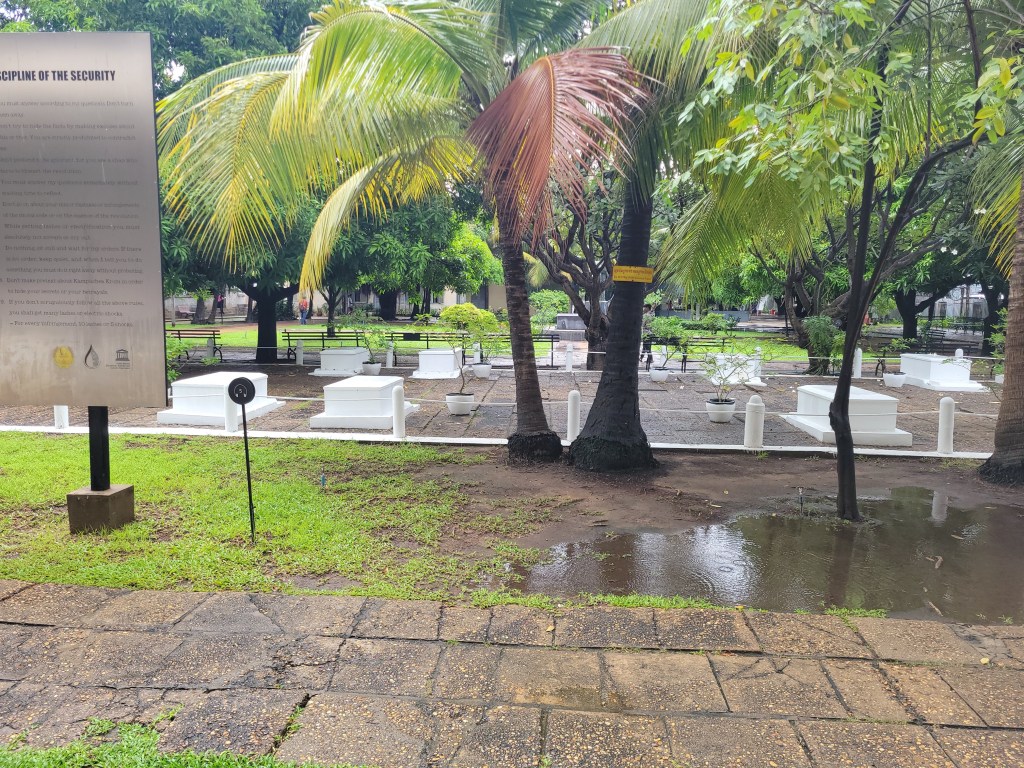
The next day might have been the most impactful day of our time in Cambodia. We were forewarned that this experience might be too much for some and had the choice of going on the tour or not. This was a visit to Choeung Ek killing fields which is about eight miles or seventeen kilometers from the center of the city. From 1975 to 1979, Cambodia was persecuted by the Khmer Rouge regime, where thousands of people to include children were executed and buried in mass graves. Victims were tricked into believing they were going to be pardoned if they were found guilty of lying or withholding information. Since then, at least two of the leaders of the communist regime were put on trial: one has since died, and the main leader, Nuon Chea, is still alive and remains in prison.

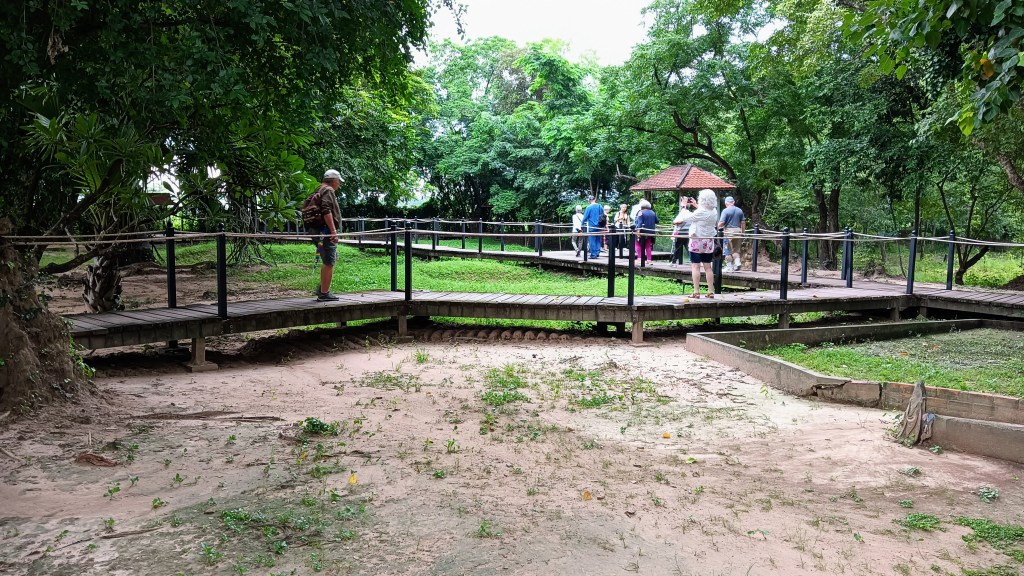


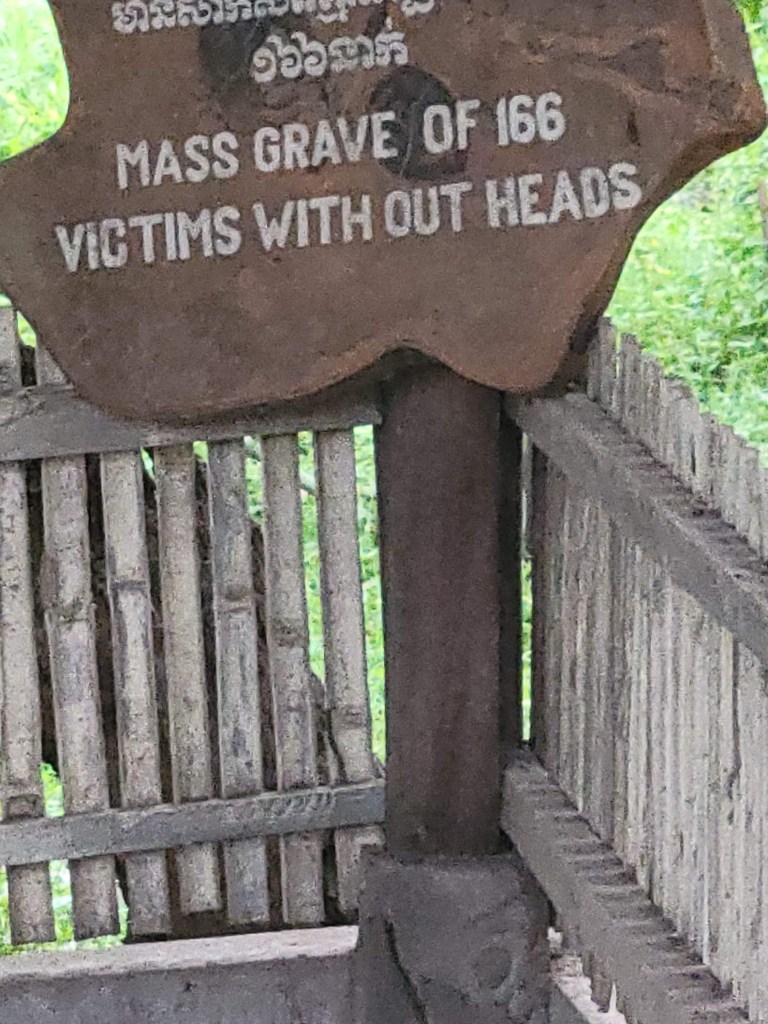


I am sure that these glimpses give you an idea of how visiting this site and hearing about the during and the aftermath of the Khmer Rouge atrocities could prove overwhelming.There were displays of weapons used to torture victims, and other evidences of genocide.
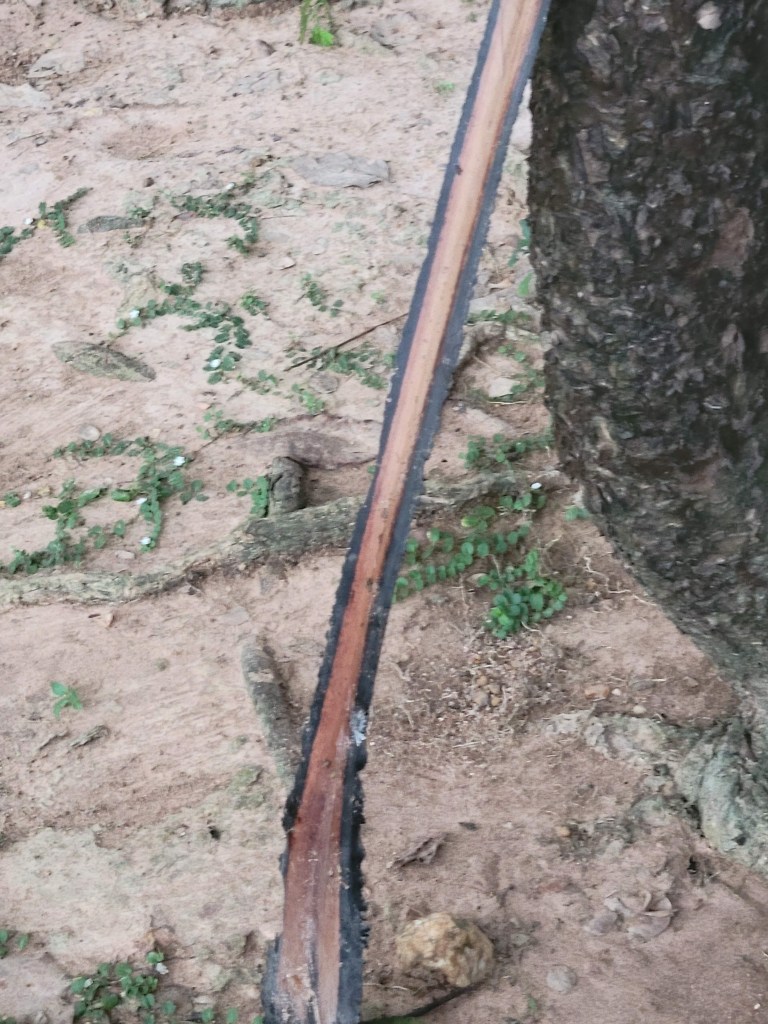
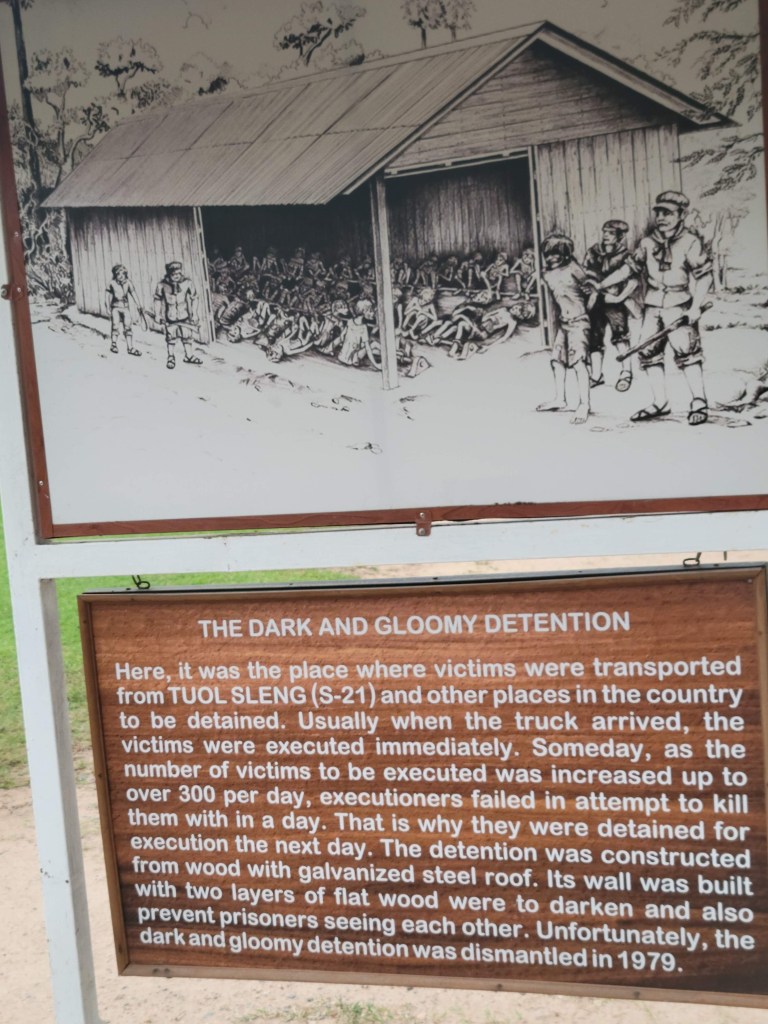
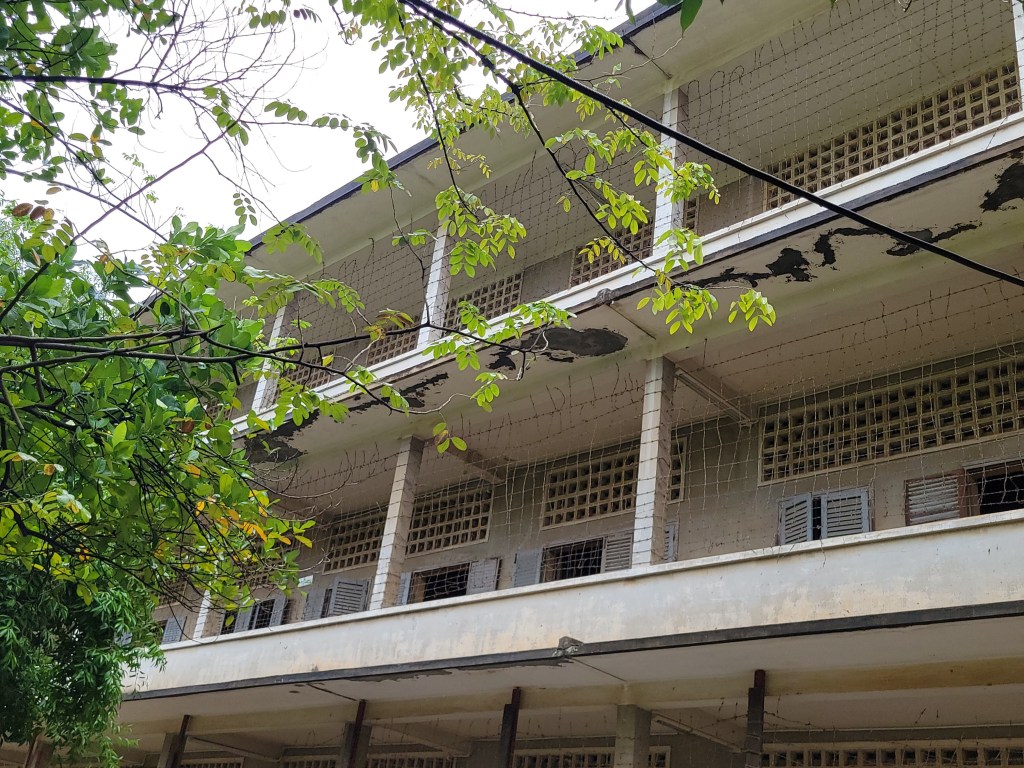
Tuol Sleng Genocide Museum was a prison where interrogations, torture and killings were carried out. The building was originally a school classrooms were converted into cells. Under the regime it was referred to as S-21 Security Office 21. As a museum, it is now visited by thousands and commemorates the genocide of the Cambodian people. These prisoners were tortured to confess activities against the regime or to identify perpetrators. The first building shows a torture room.


The next section had pictures of victims, thousands of photographs, mug shot type. We then moved on to section C where men were held on the ground floor and women on the upper floors. These cells were created with brick on the first floor and wood on the upper floor.
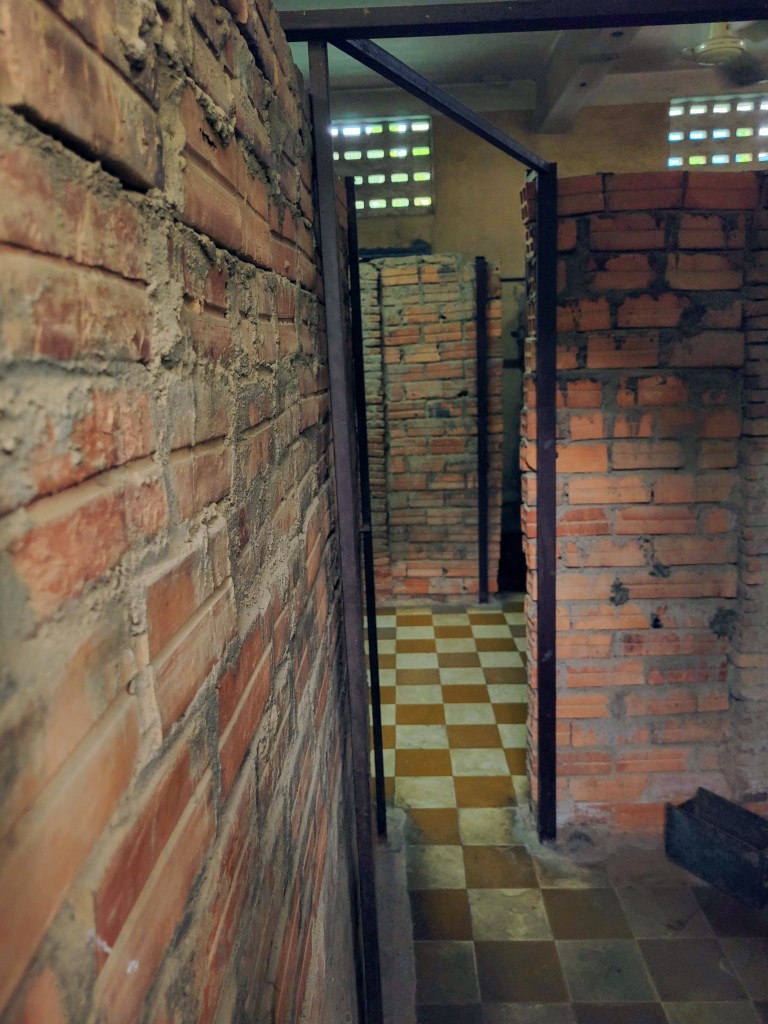

It is said that only twelve survived, and we were able to meet a 93 year old survivor, Chum Mey.





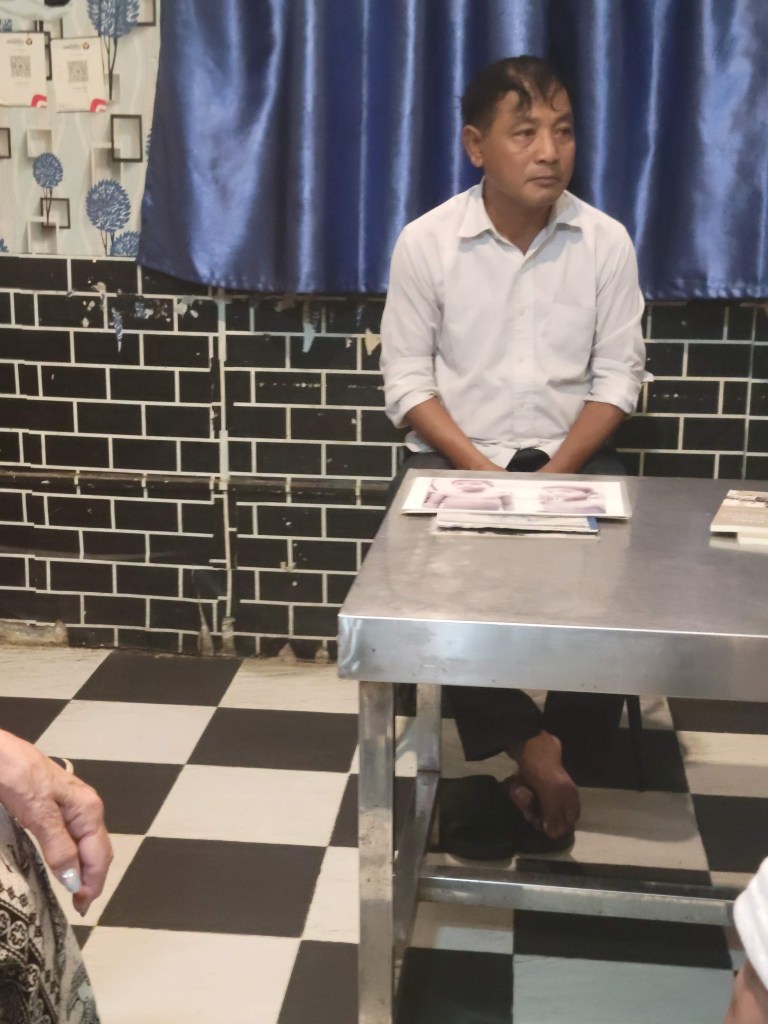
We were off to speak with some survivors who were children during the Khmer Rouge rampage. The male was five years old, and he and mom thought they were coming to see his father but instead a confused child watching his mom savagely beaten while trying to keep him from saying anything. He was separated from his mom similarly to a lot of other kids. Both parents died at S-21. Norng Chan Phal continues to build his life, but he is not content that more of the perpetrators were not penalized.

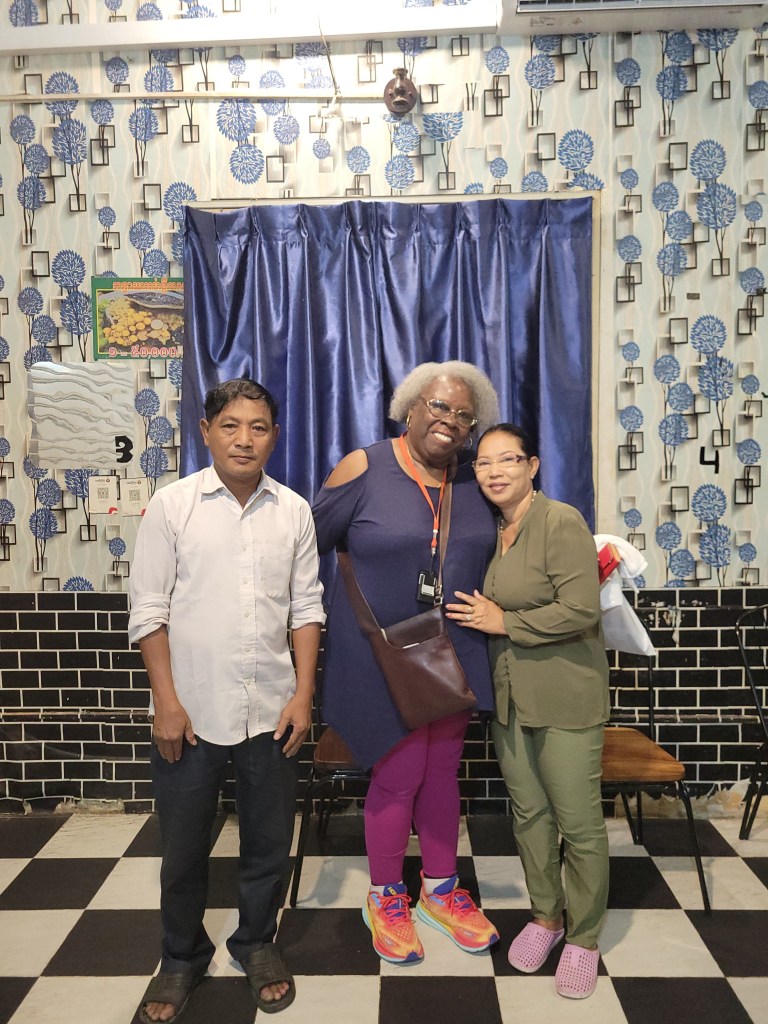
This lady was eleven years old and experienced separation from her family also but fortunately for her she was united with her family later. She is living a normal life now but remembers the horror and fear of having been separated . She also stated when asked about the leaders of the regime being held accountable, felt that more should have gone to trial.
Both the ninety three year old from the museum and Norng have books telling their stories. All three showed determination and resilience in living through that period and are still forging ahead. It was a heavy day but such an educational experience. You know a bit of certain incidences but if not directly affected you do not realize what it is really like.
The next day, we left Phnom Penh heading to Sien Reap via coach, which was about an eight hour ride. Last glimpse of Phnom Penh
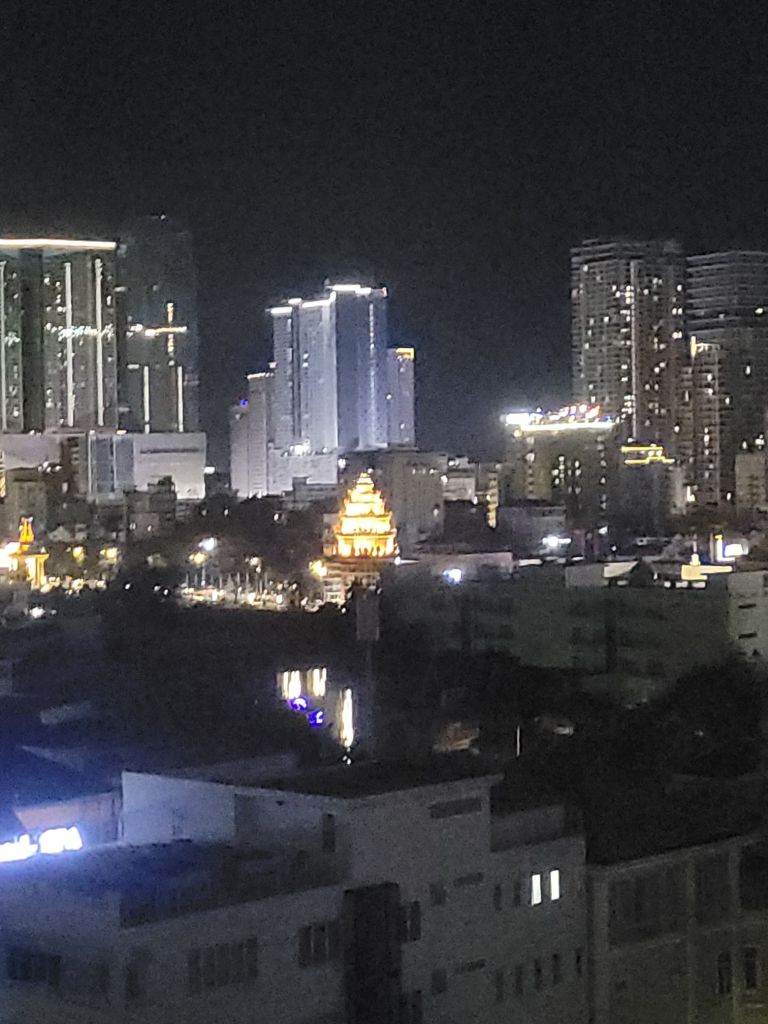

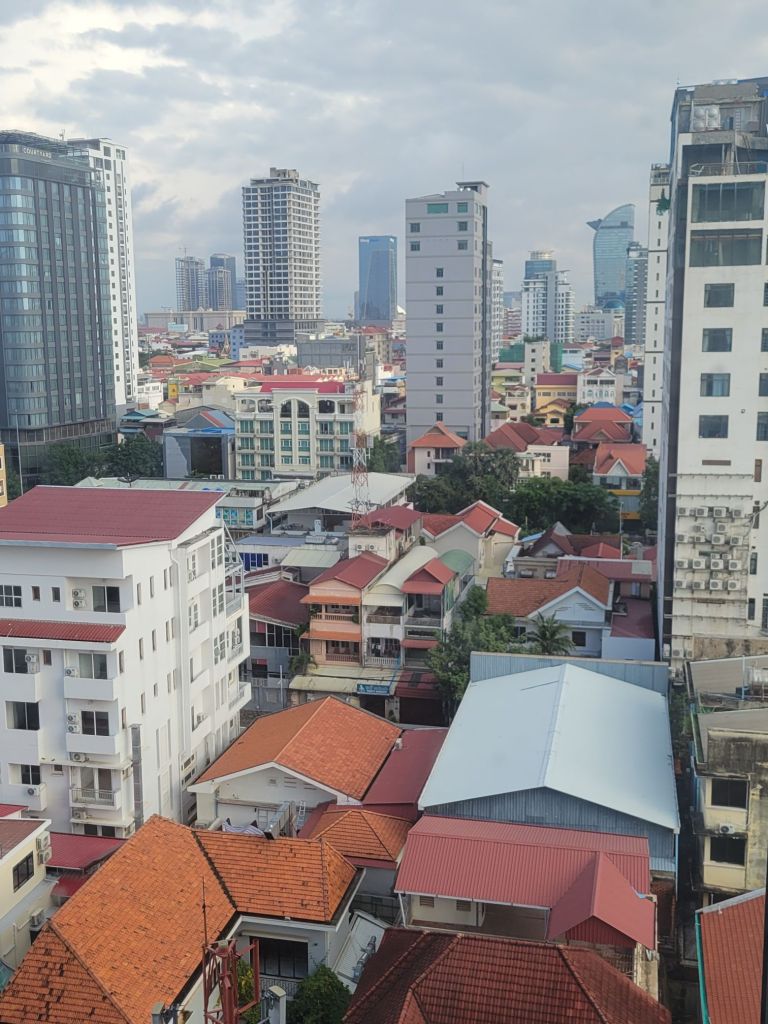
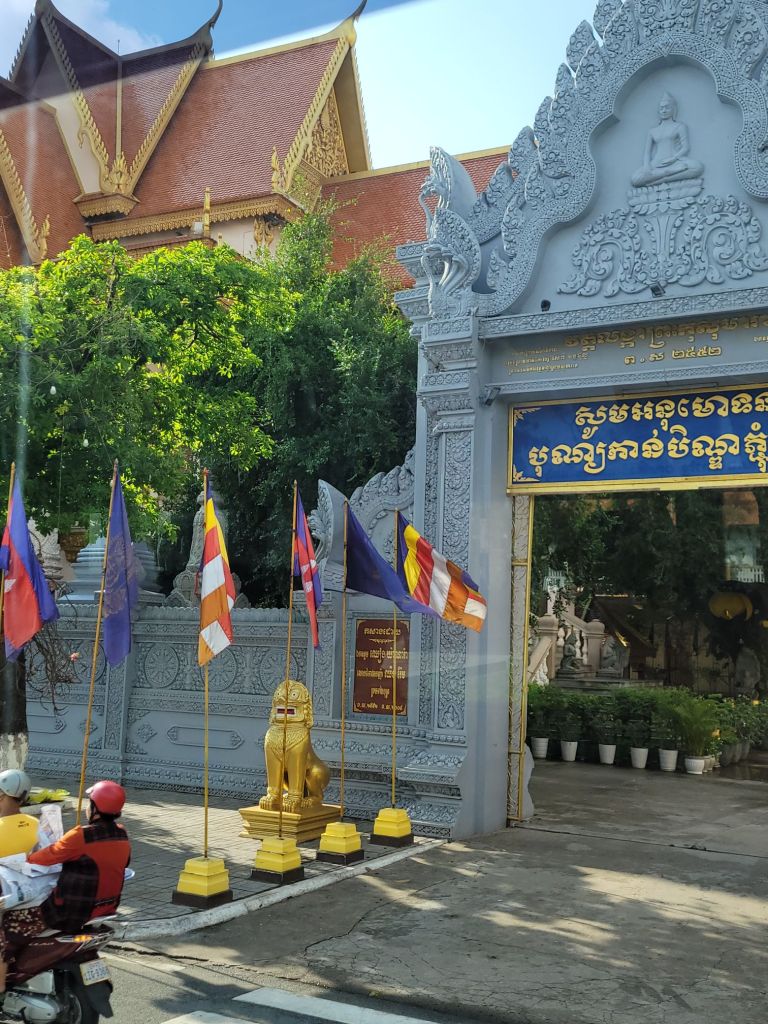


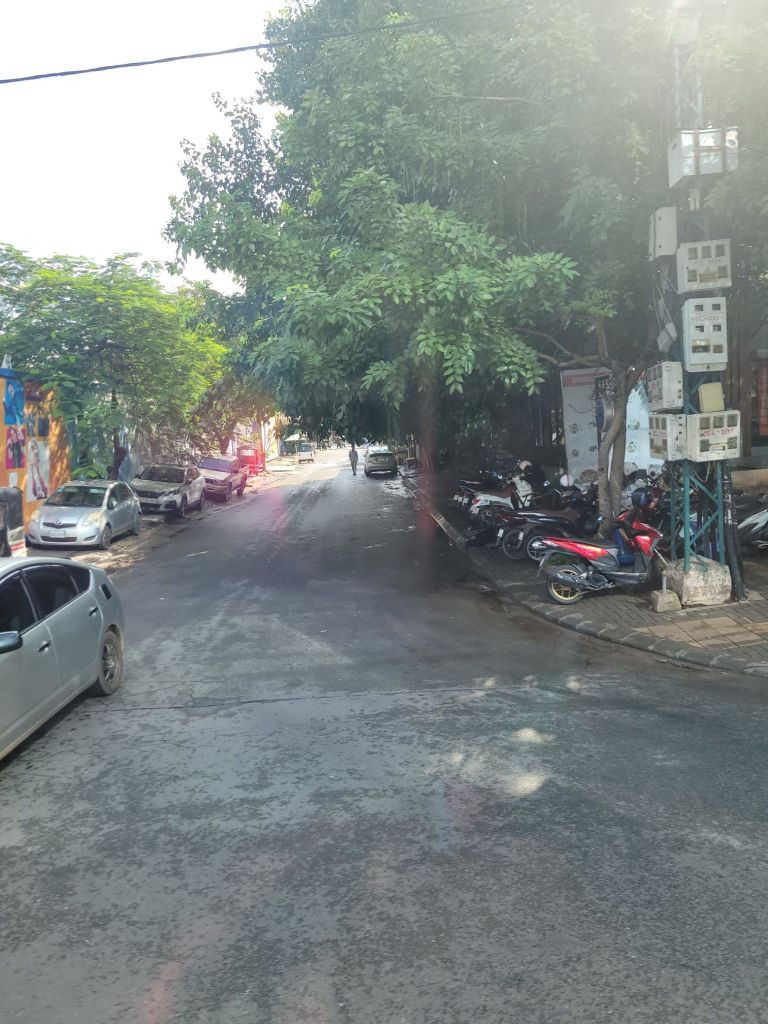
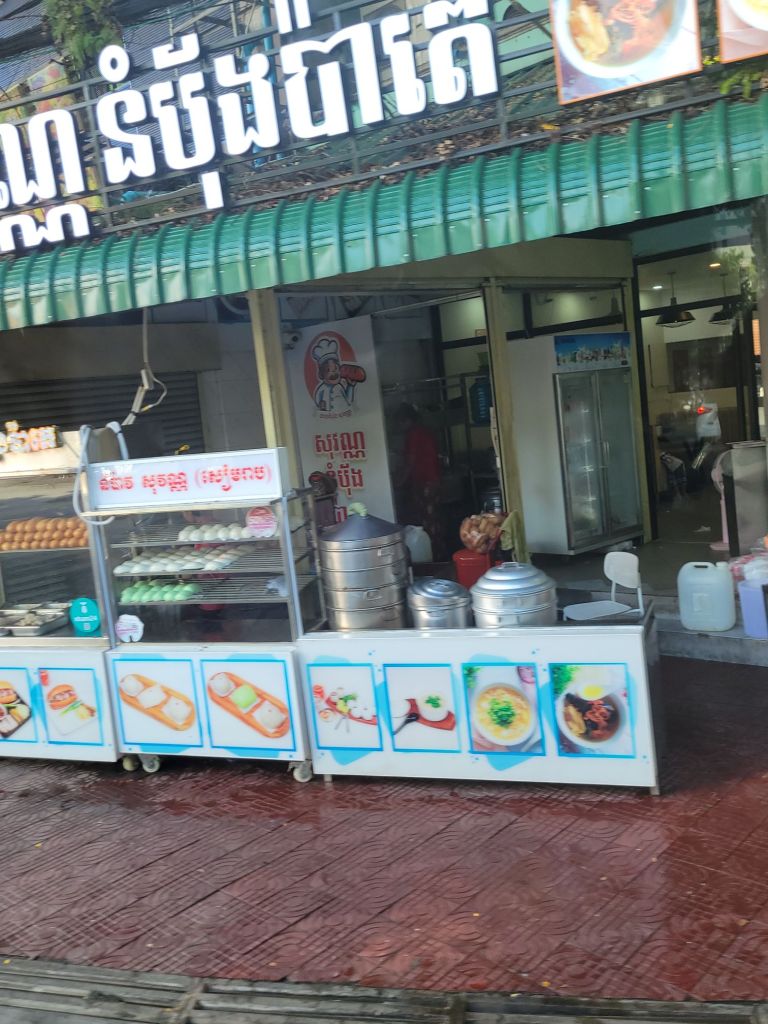
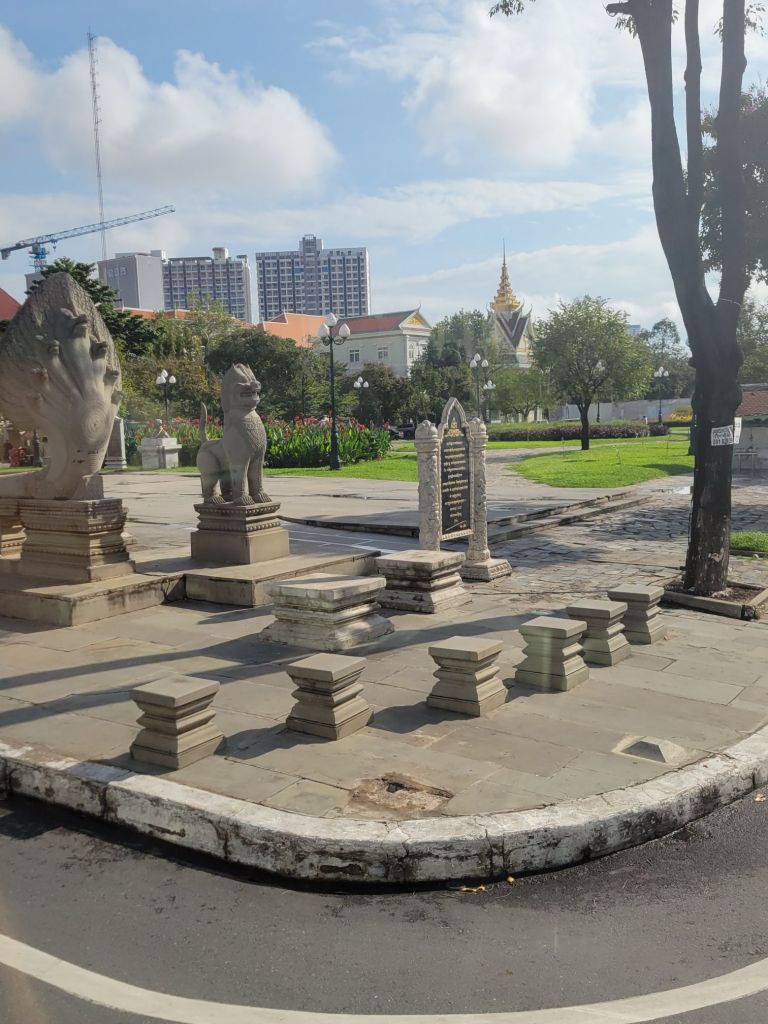
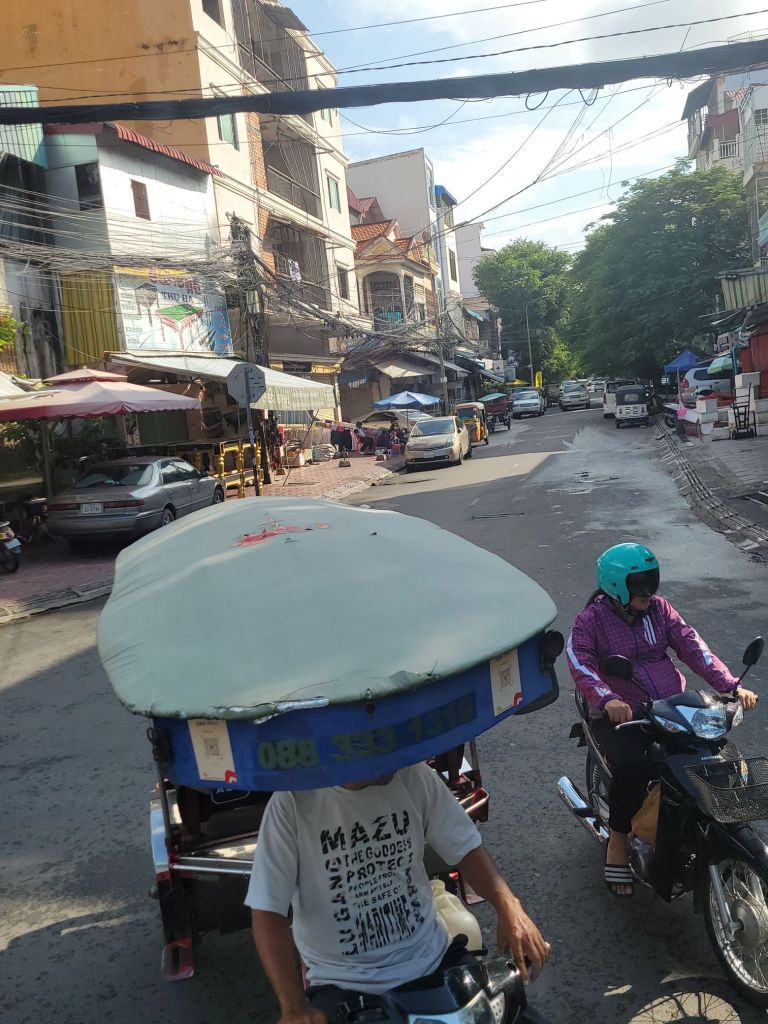
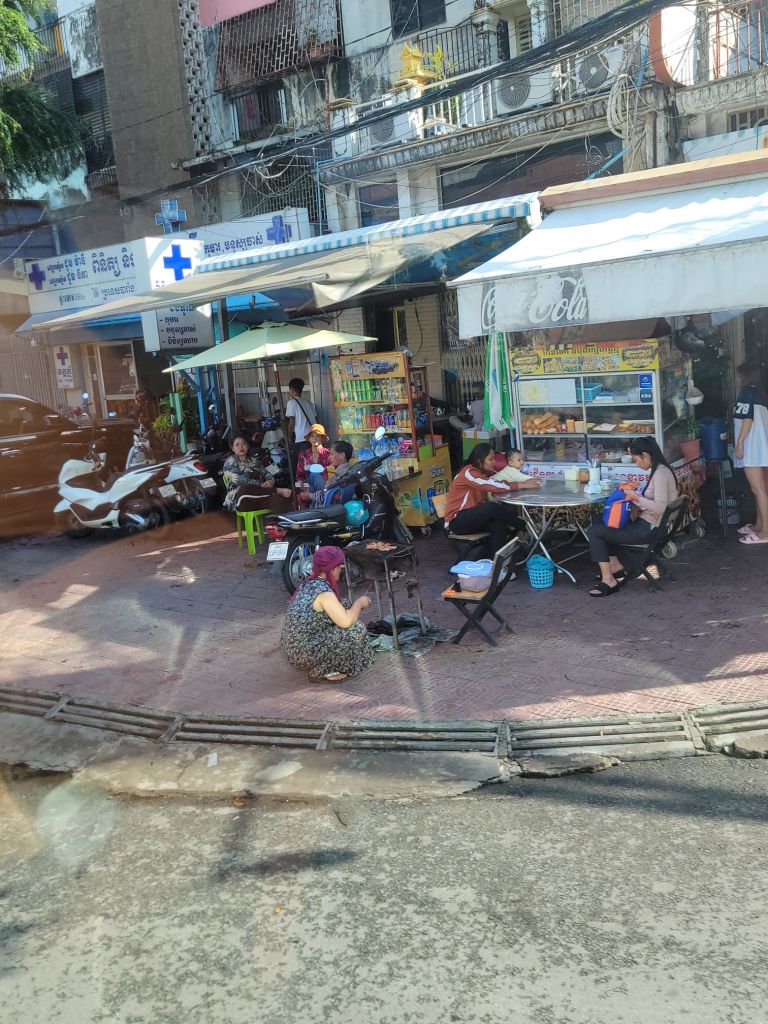

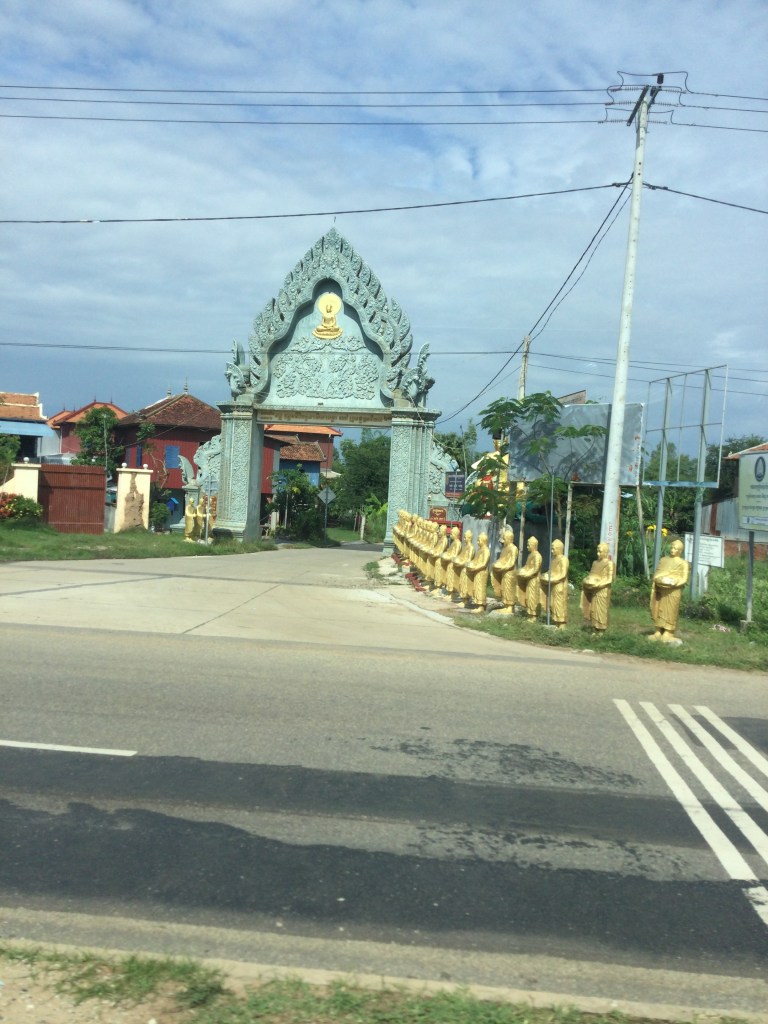
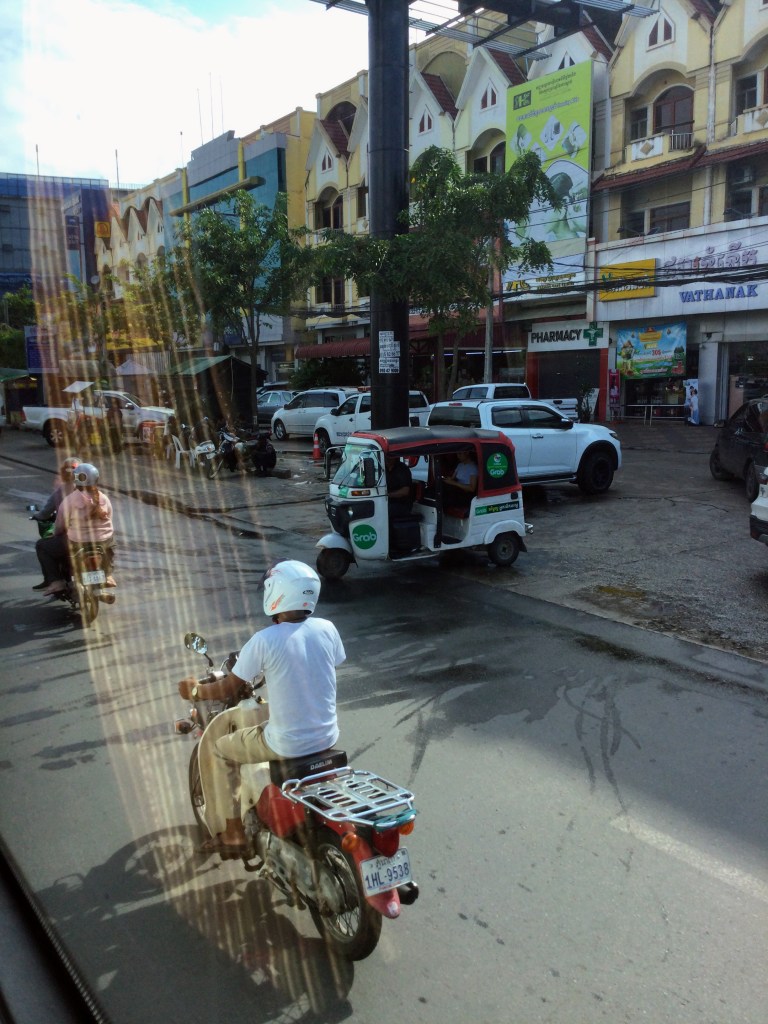

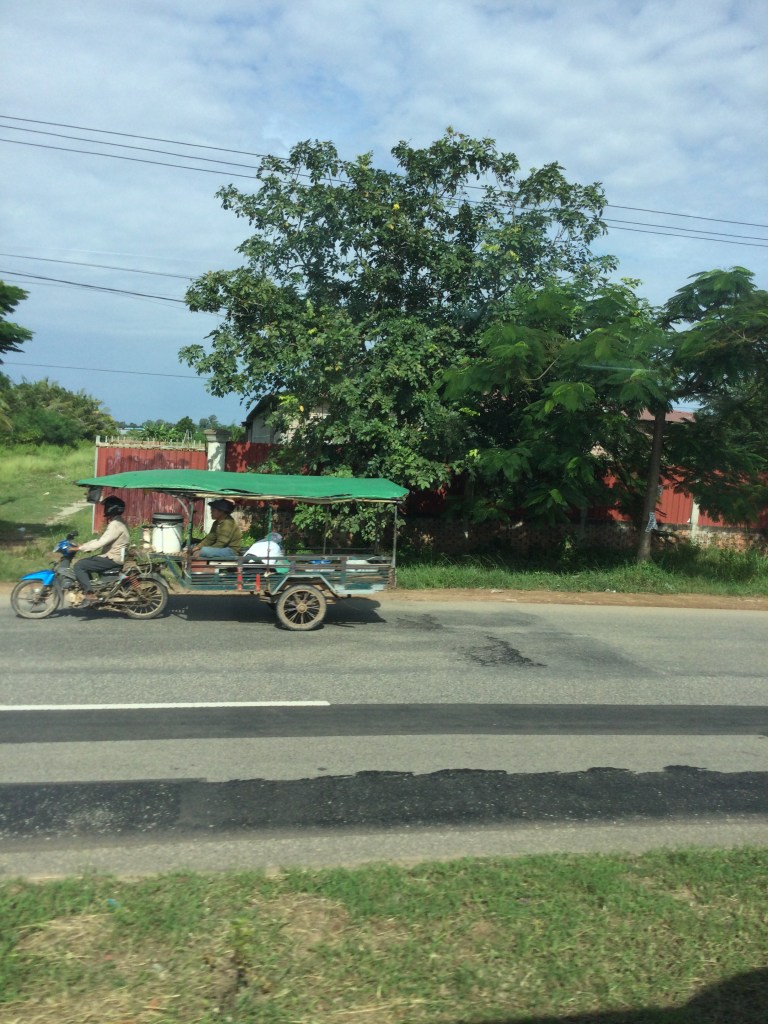
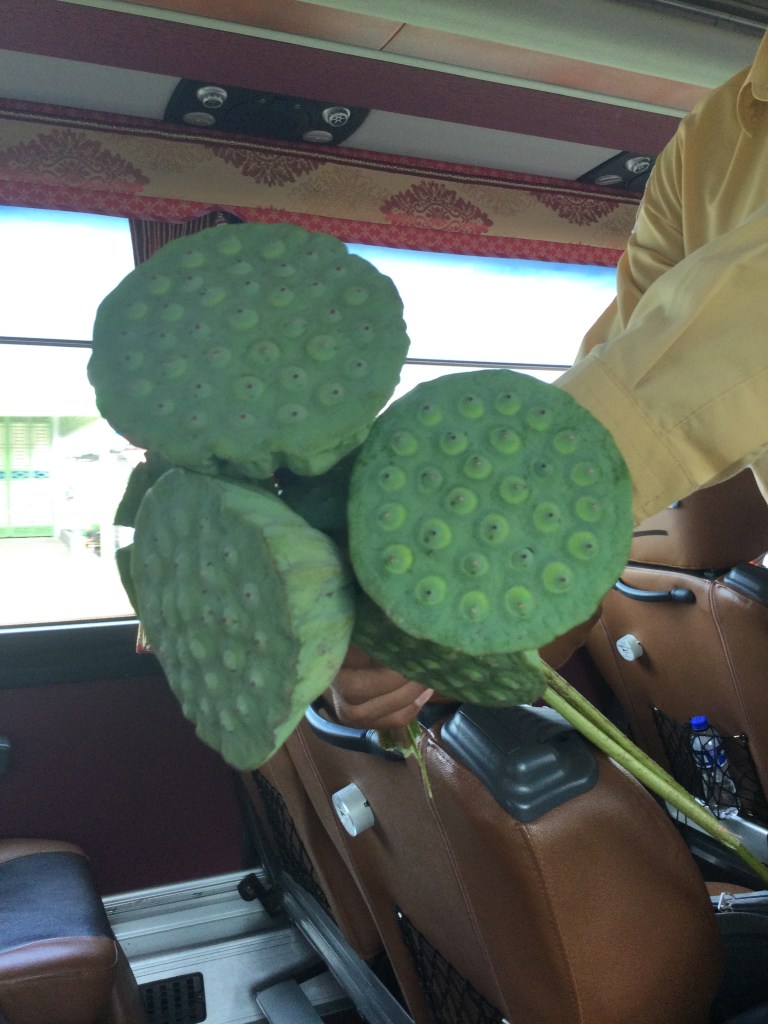
As we traveled along we passed several temples, food stalls, some with large pots out front, and some temporary ones also maybe on a cart or on a vehicle. We made a brief stop where a vendor was selling lotus and some of us had a taste of the lotus seed or pods to me it was like any nut with a bland taste.

Our next adventure and learning was when we visited the home of this woman who hunts tarantulas cook them and sells them at the local market.
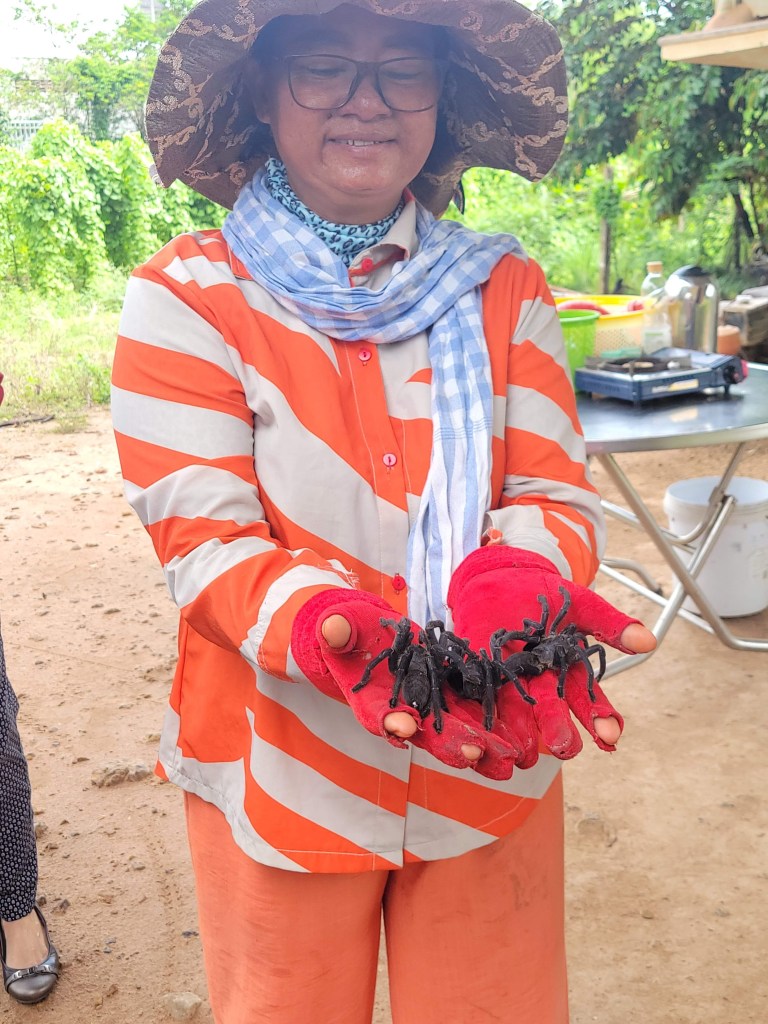
We ventured into the field with her as she demonstrated her craft.
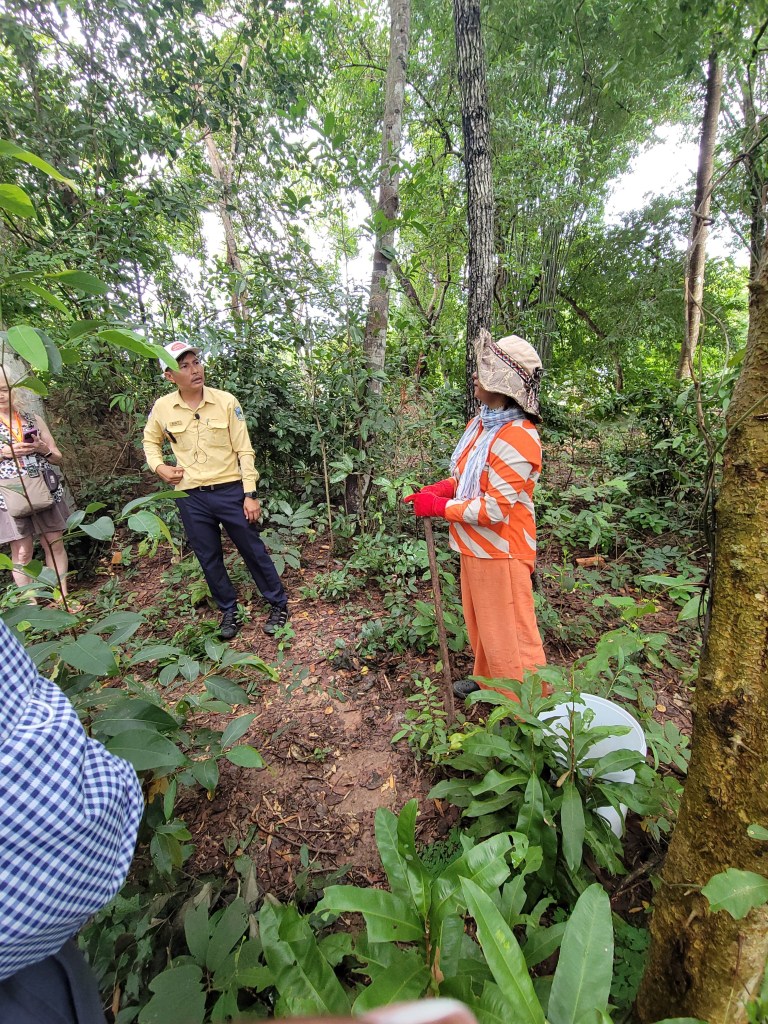


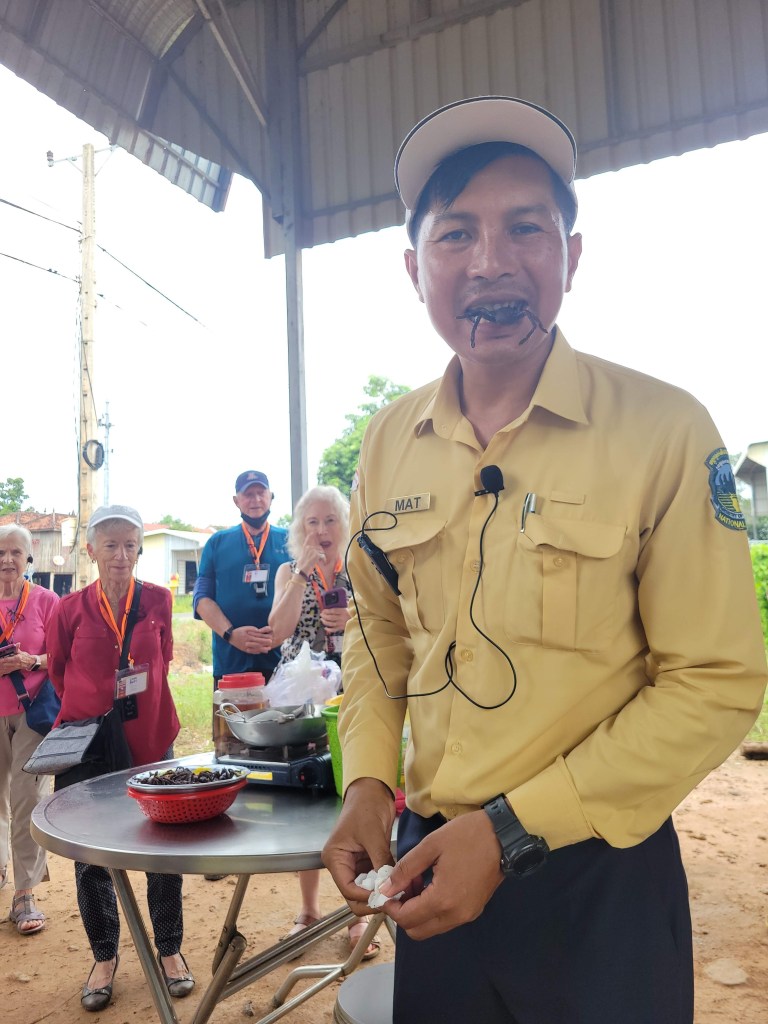
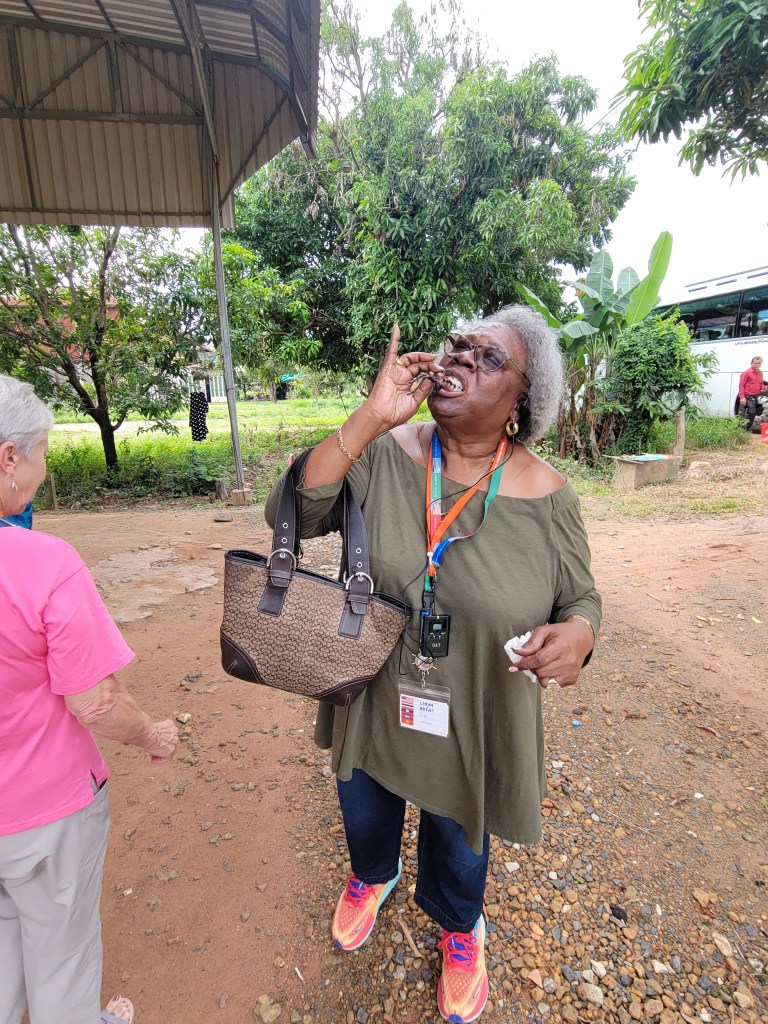
After being harvested, the tarantula is boiled then fried. This is a specialty snack of this region. The legs are crunchy, which was not a problem for me to try with other members of the group. There was a puffy part that I spat out because I did not care for it because it contained a fluid.
We came to another village where there were several Buddha carving factories. There were carvings of all sizes. I wondered how do they transport some of the large pieces.


As we drove along we saw flooded rice farm areas. We were visiting in the rainy season but fortunately we escaped any impact by rain.


We stopped for lunch at what seemed to be a very popular restaurant, Prey Pros restaurant. It was bordered by a river and the location offered a lovely scenic place for dining. Needless to say the servings were plenty and varied.
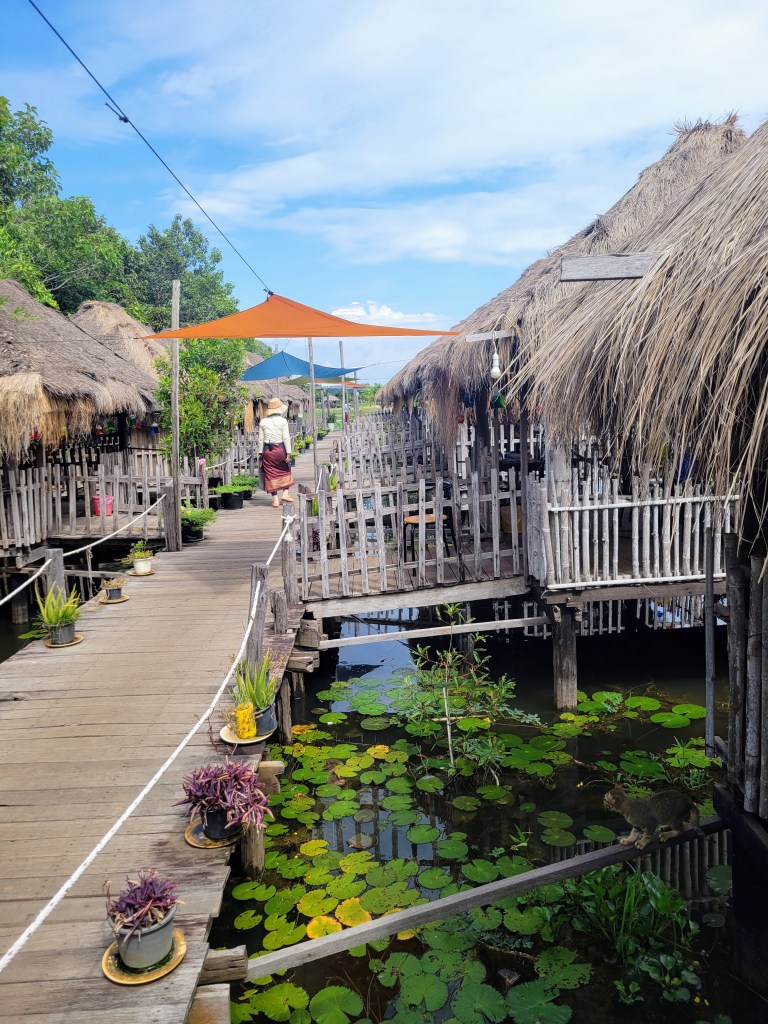

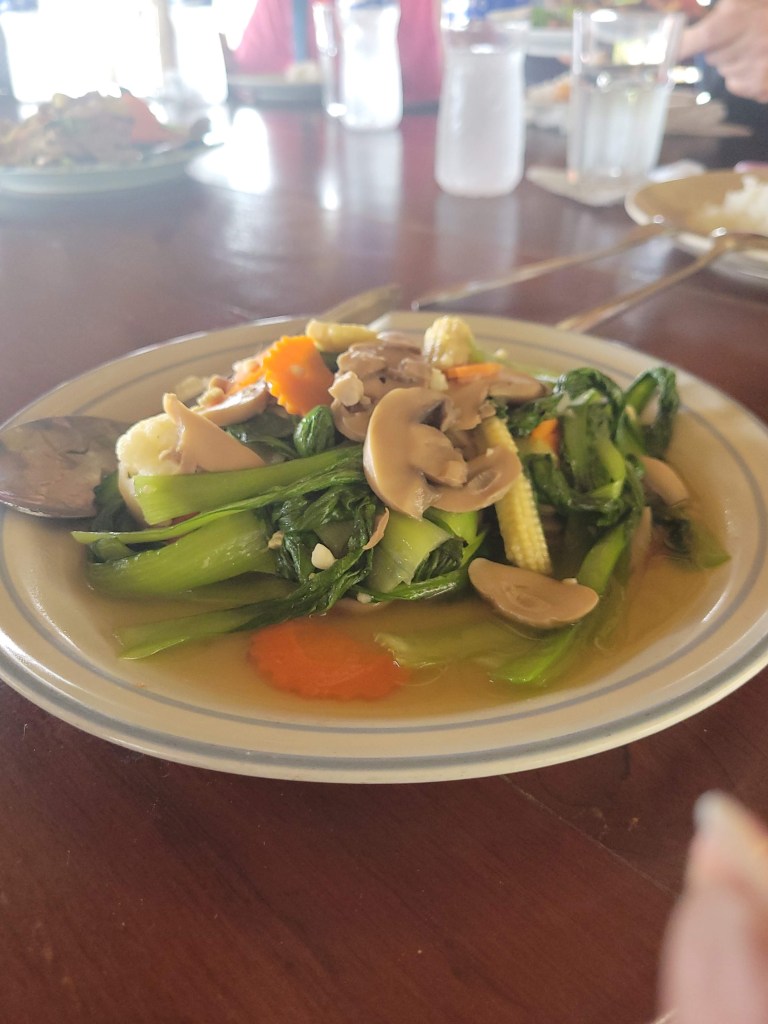
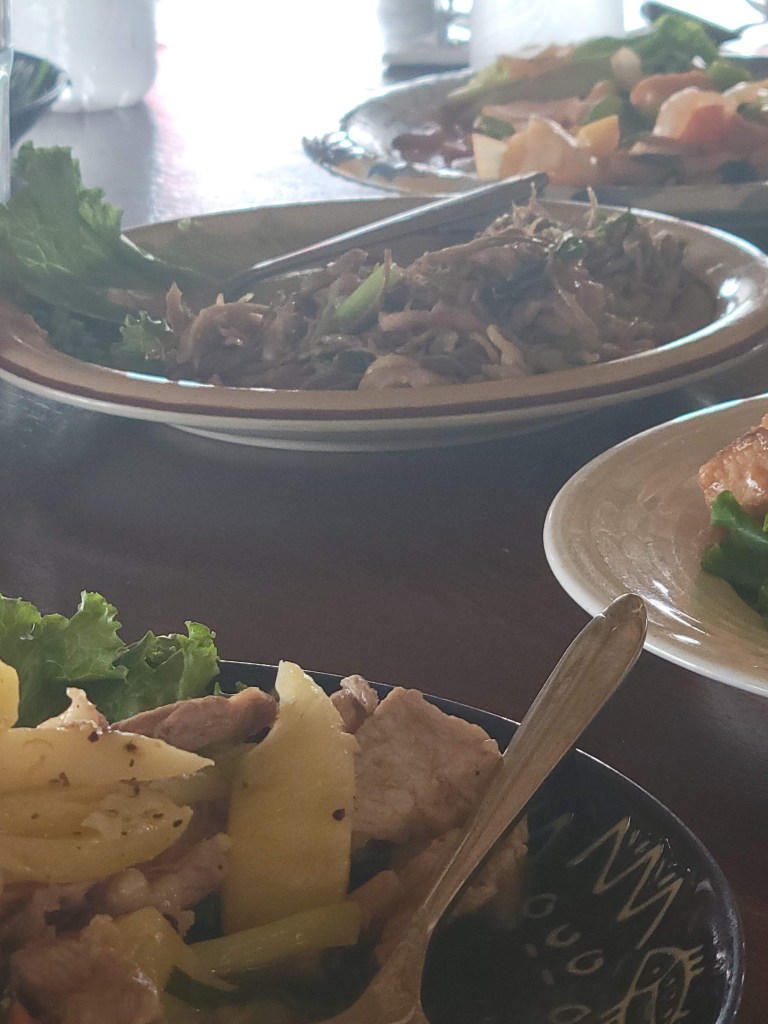
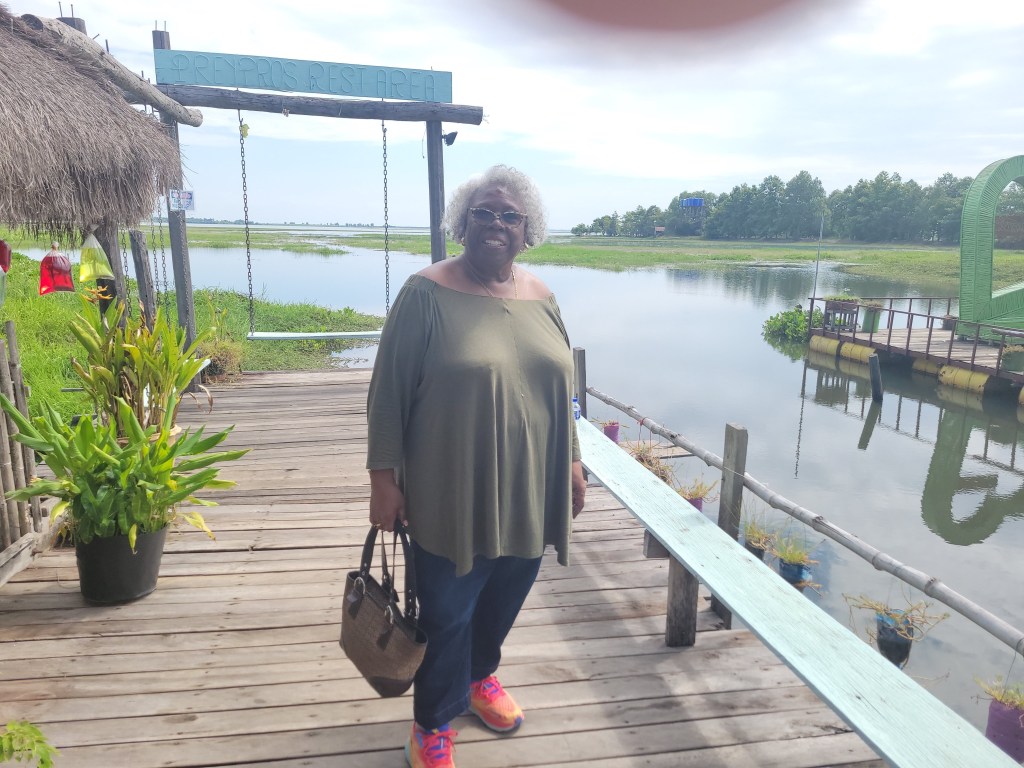
While driving along we noticed three people on a bike with a pole and an object that appeared to be an intravenous bottle. It is common practice if the patient is not able to pay for extended hospital stay they will be discharged in care of the family. Amazing I thought in fact we were all amazed.

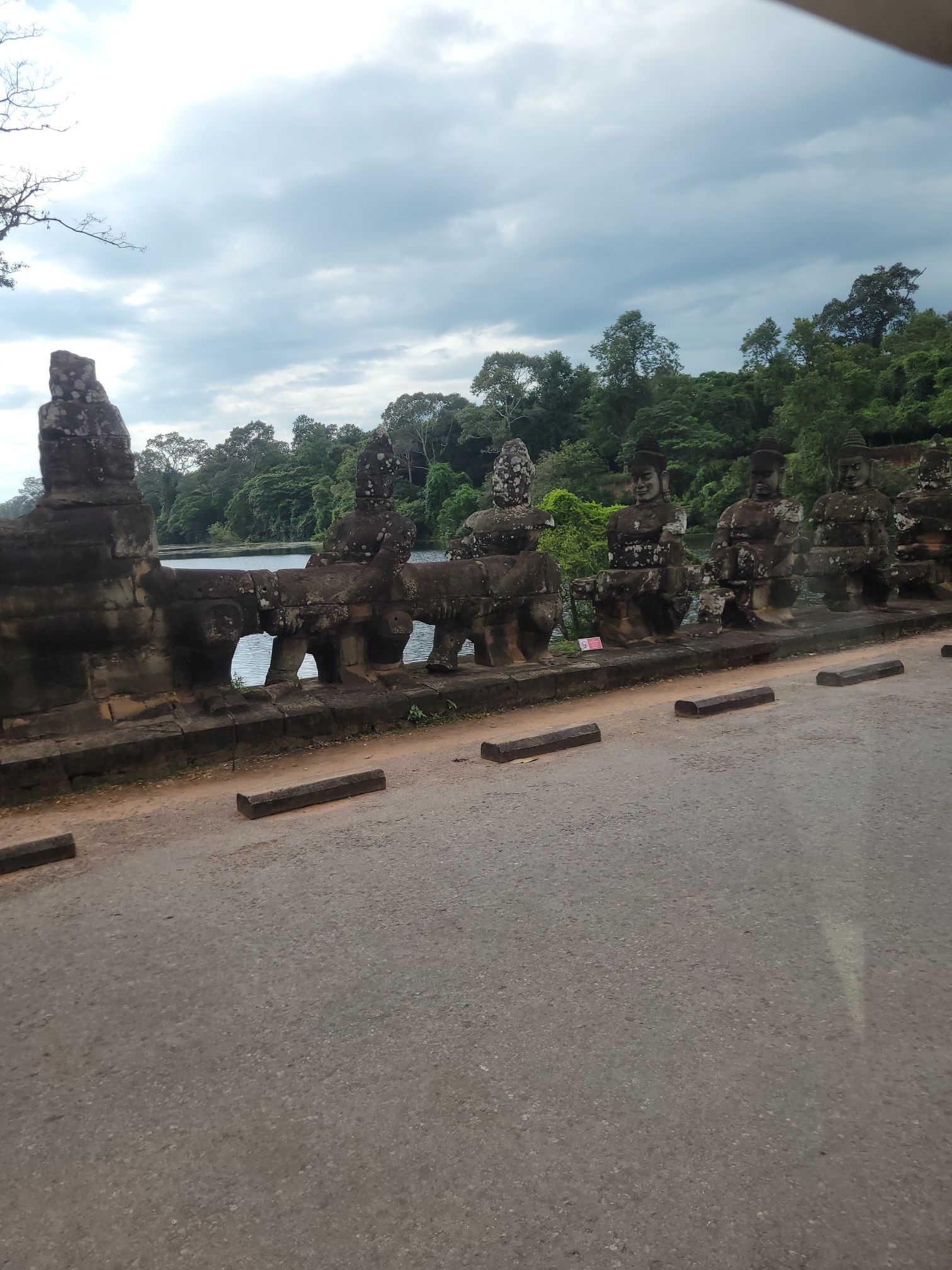
Our next stop on our way to Siem Reap was the historical Naga Bridge or Kampong Kdei Bridge. The bridge was built in the 12th or 13th. Century.
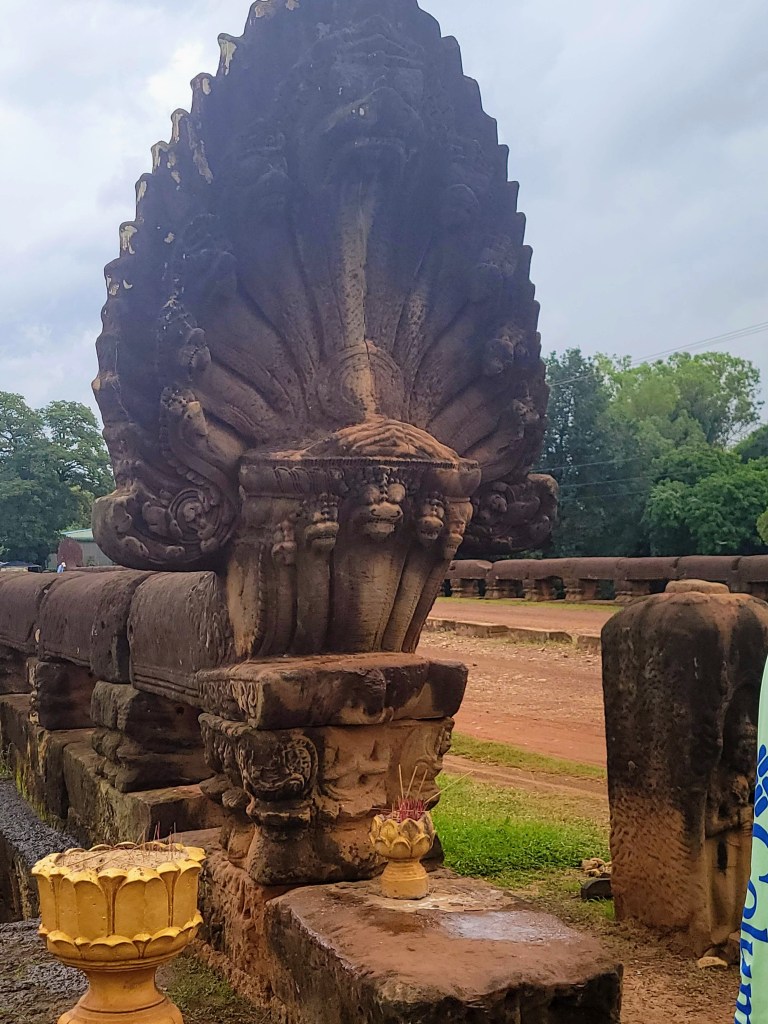
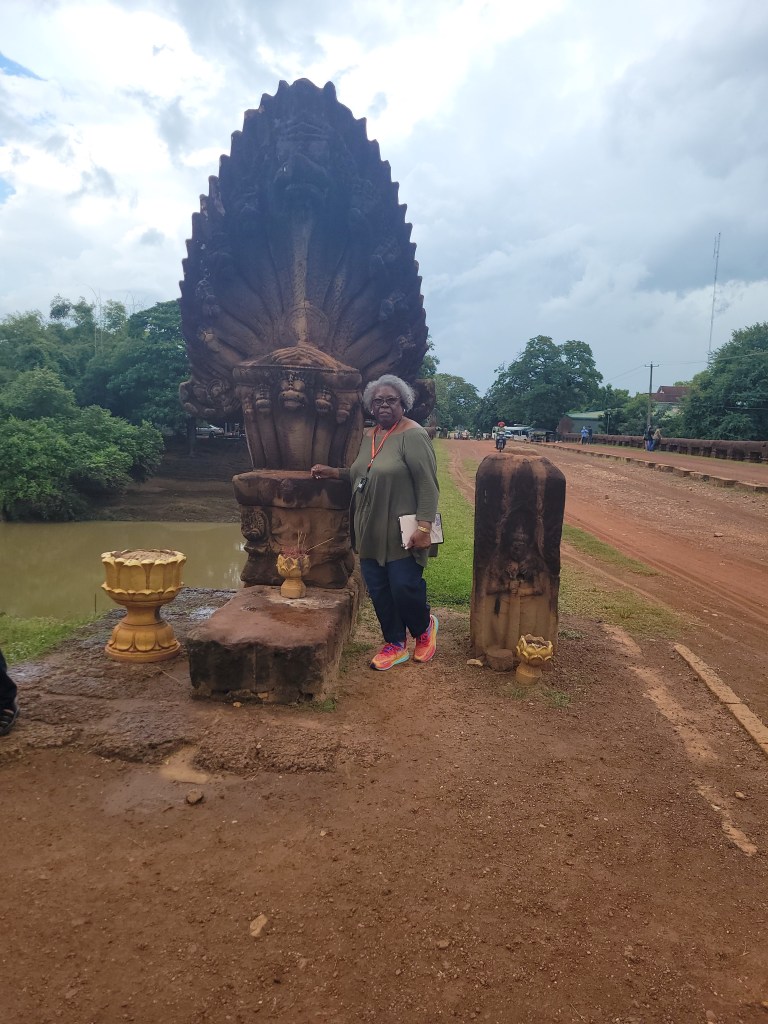
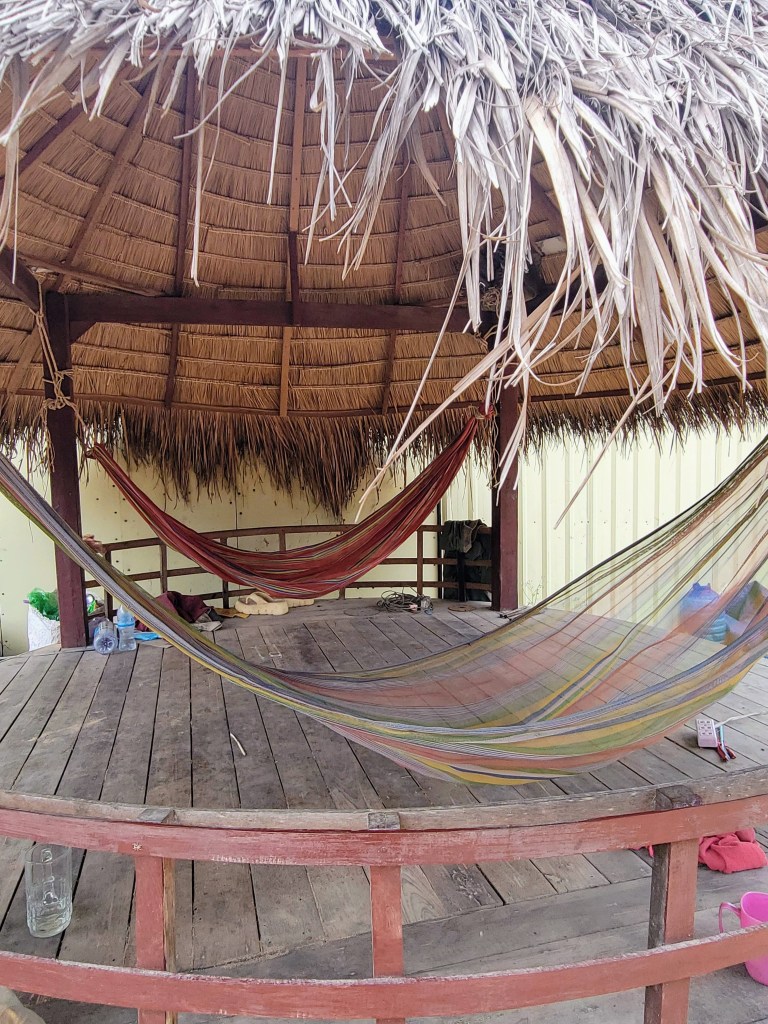
As we drove along we noticed hammocks were plentiful in front of stores homes etc. these are used a lot for siesta.

We stayed at the Regency Angkor hotel in Siem Reap. There are many Angkor hotels so if you are going out and need to take a cab or remok, you need to be specific. Close to our hotel was a laundry business where guests can drop their laundry in the morning and it would be ready by evening. I did not use the service but I understand that it was very reasonable.
One of the things I really enjoy traveling with this organizer is the uniqueness of the experiences included in their itineraries. We went through a local village using a traditional mode of transportation, water Buffalo drawn cart they use in this community. Take a look at the fun we had.
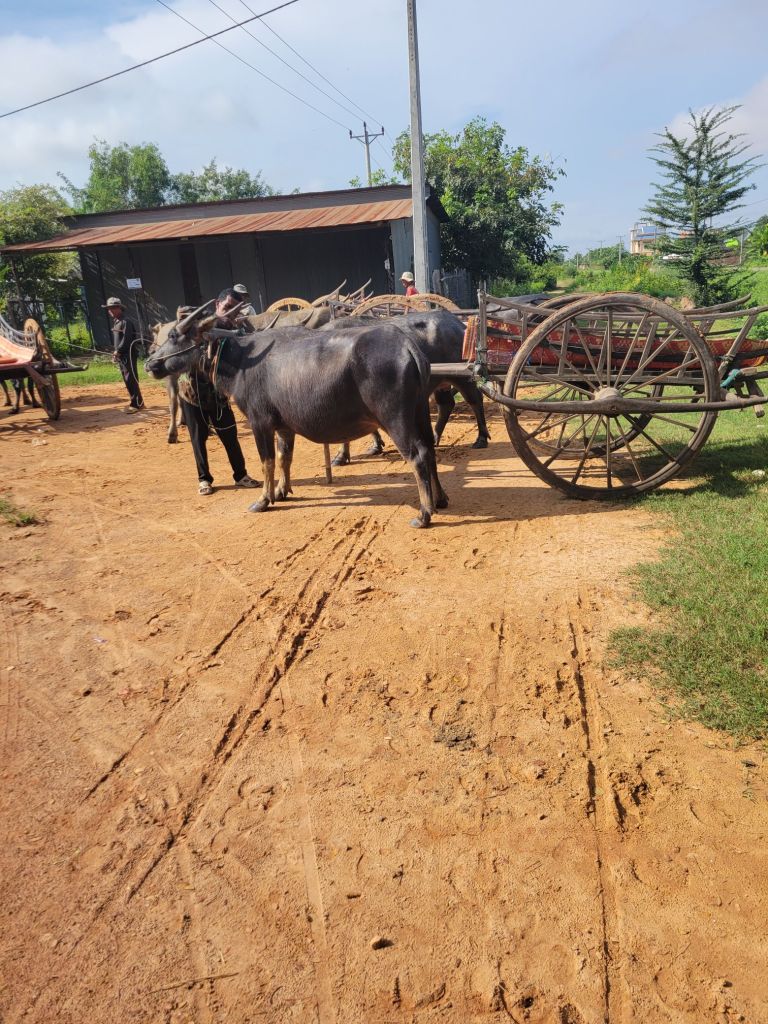

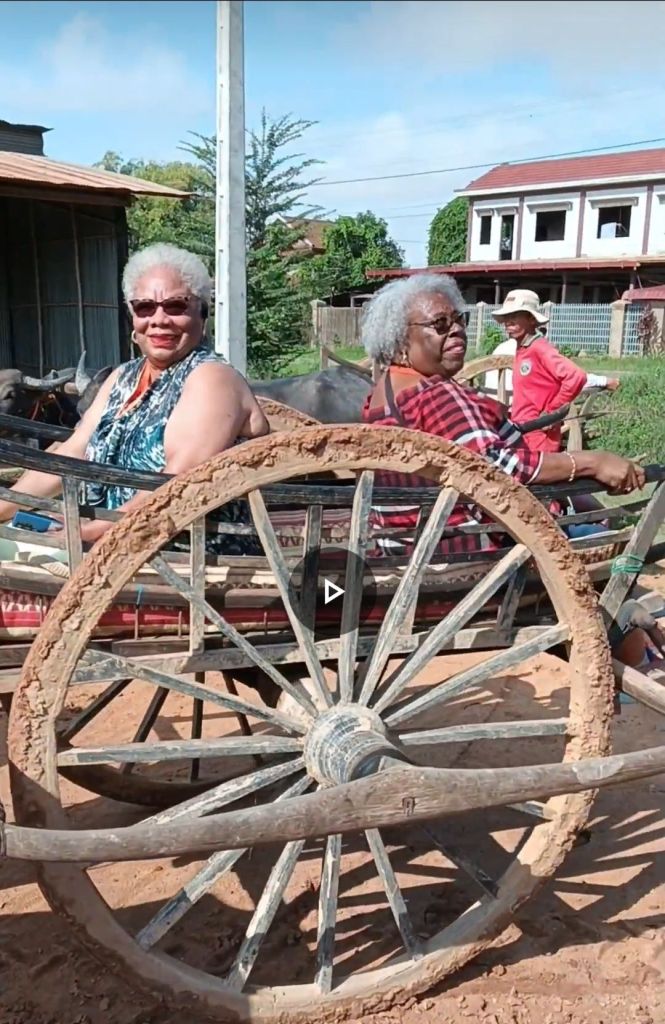


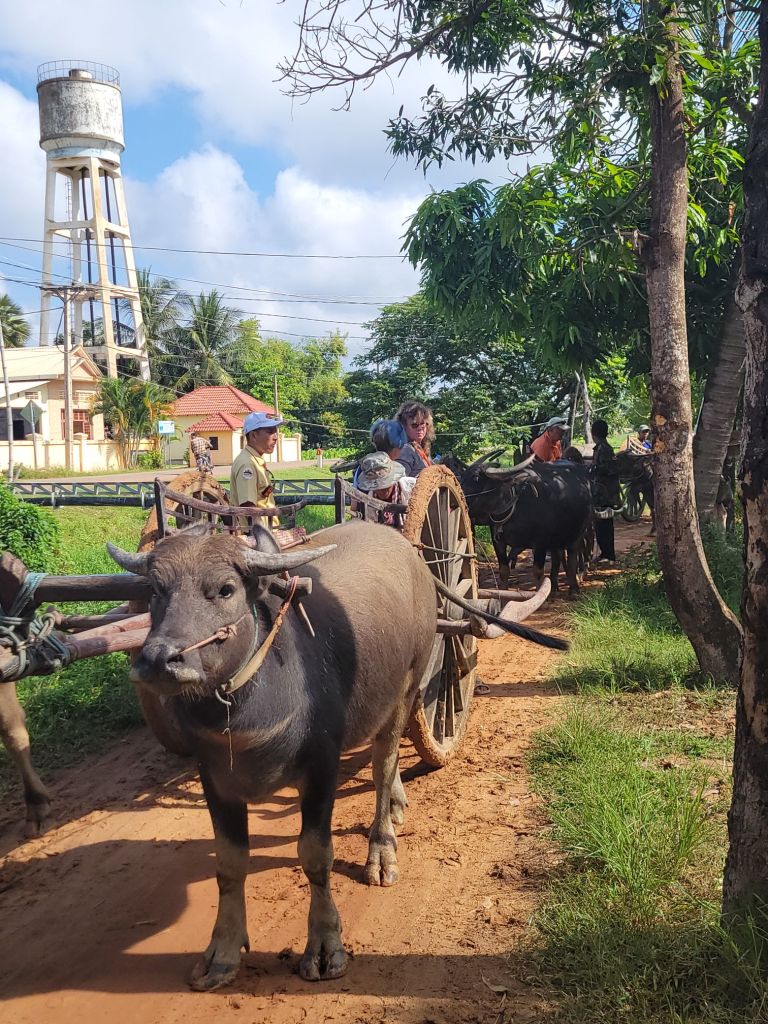


Each cart had two people, one facing forward and the other backward and the driver.We rode through the village on an uneven dirt road. As we rode through people working in their homes waved clearly they are accustomed to people passing through.
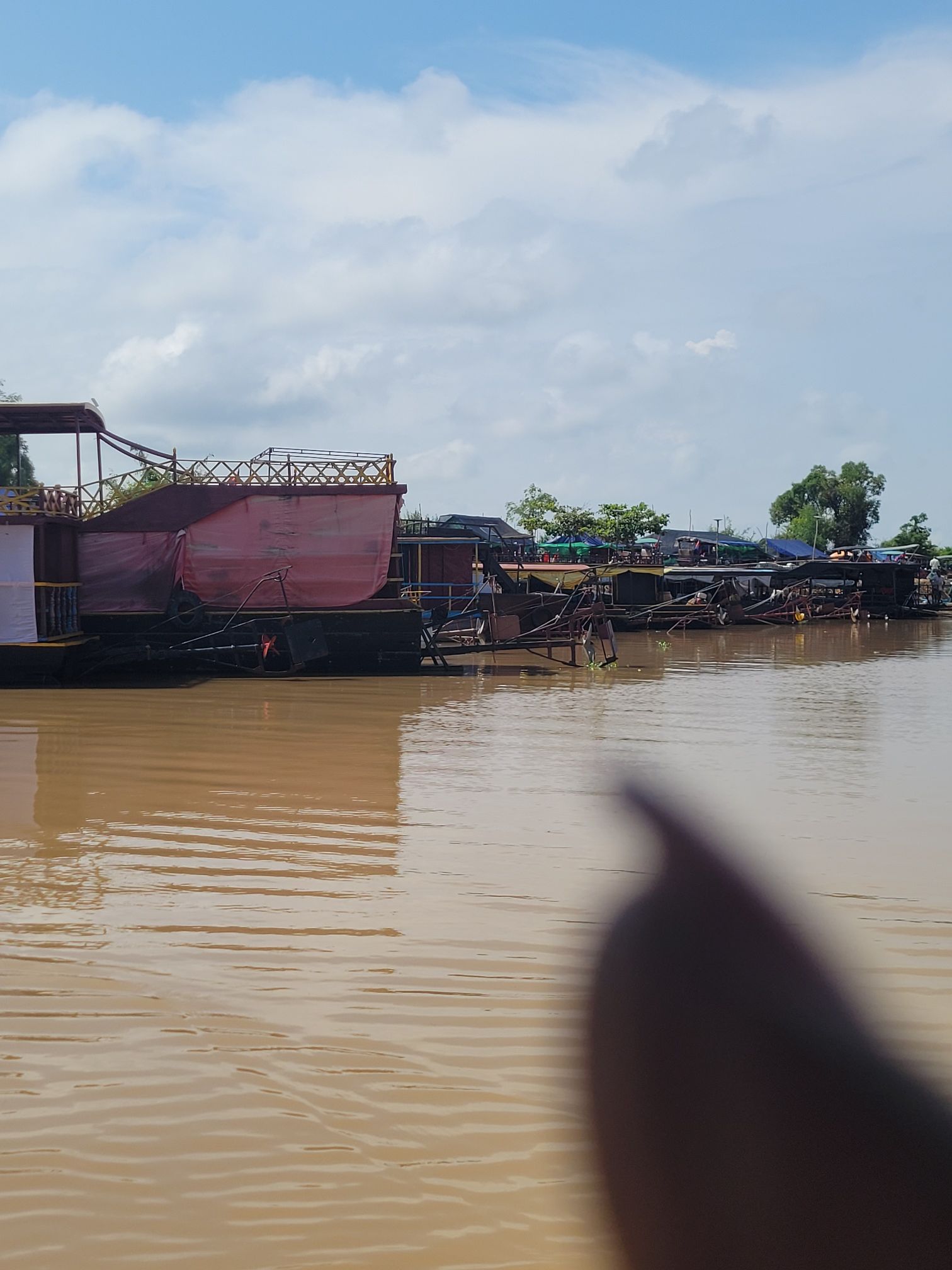
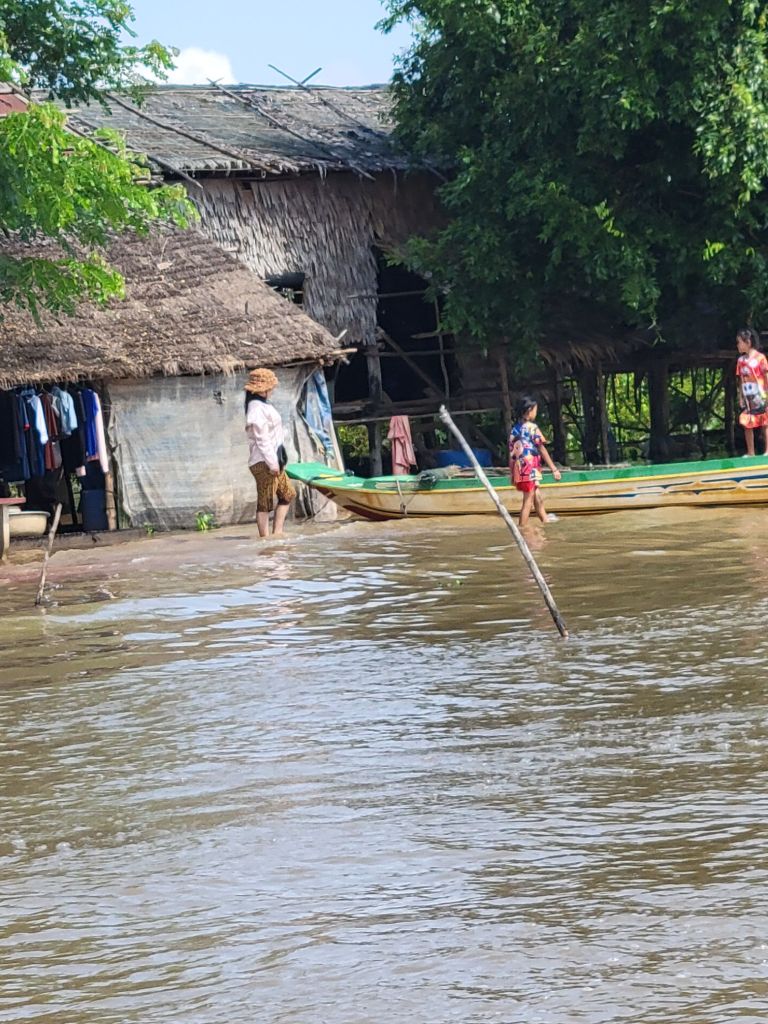
After leaving this village we went to the pier to get aboard a boat to go visit the floating village.


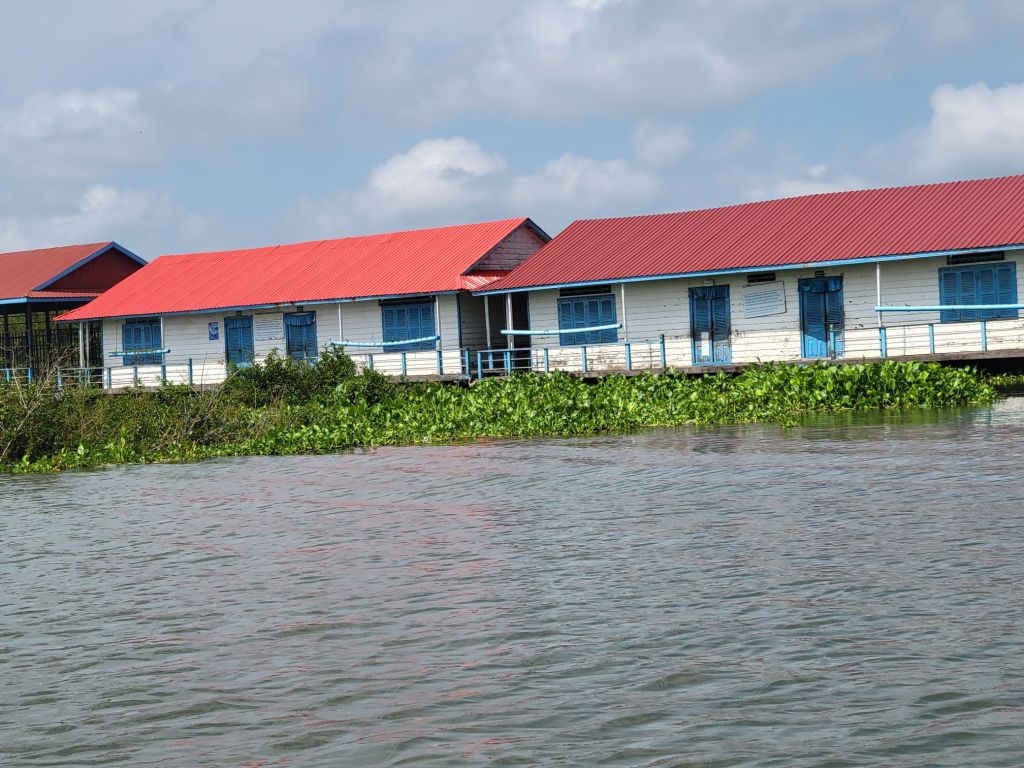

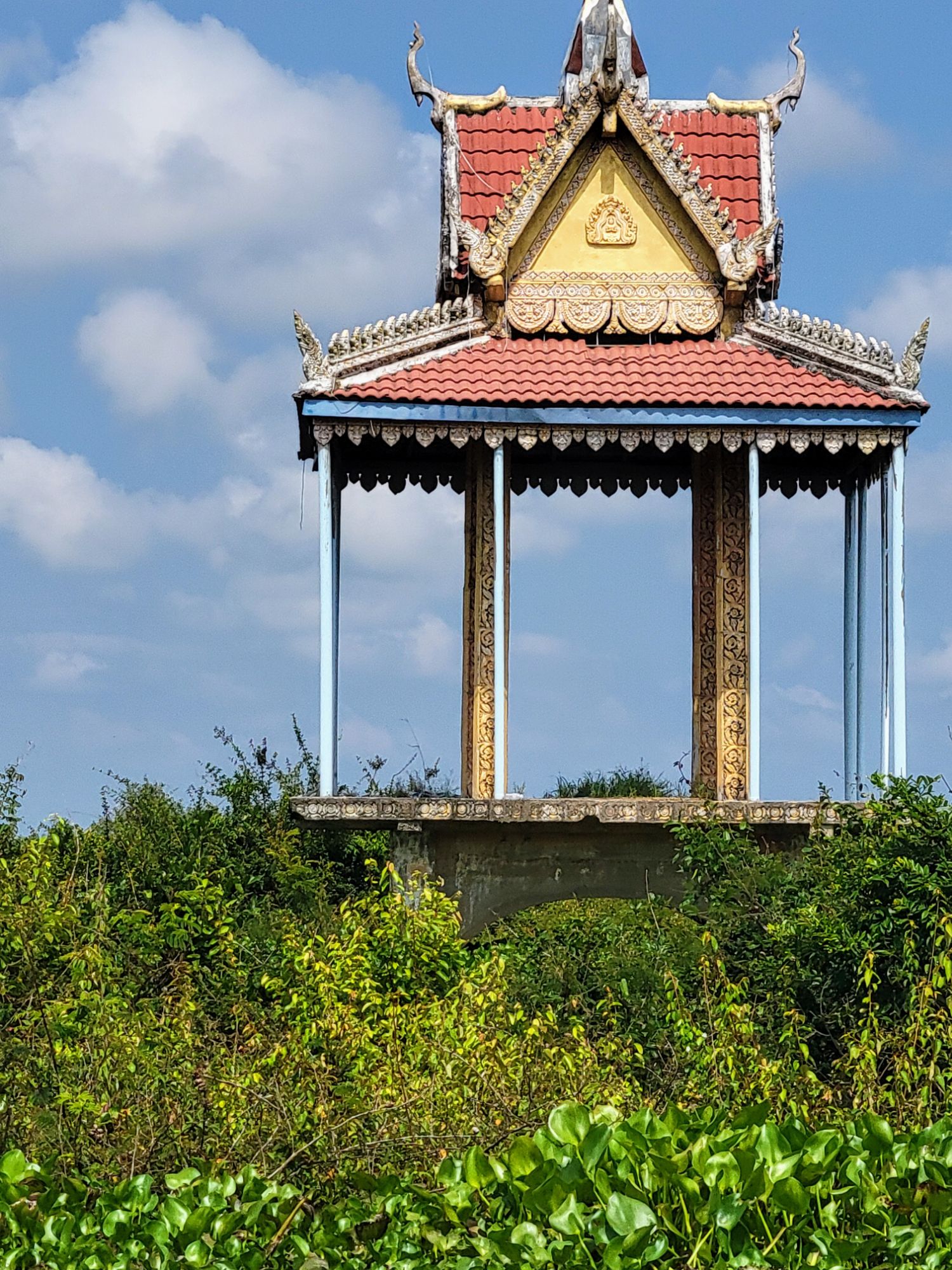


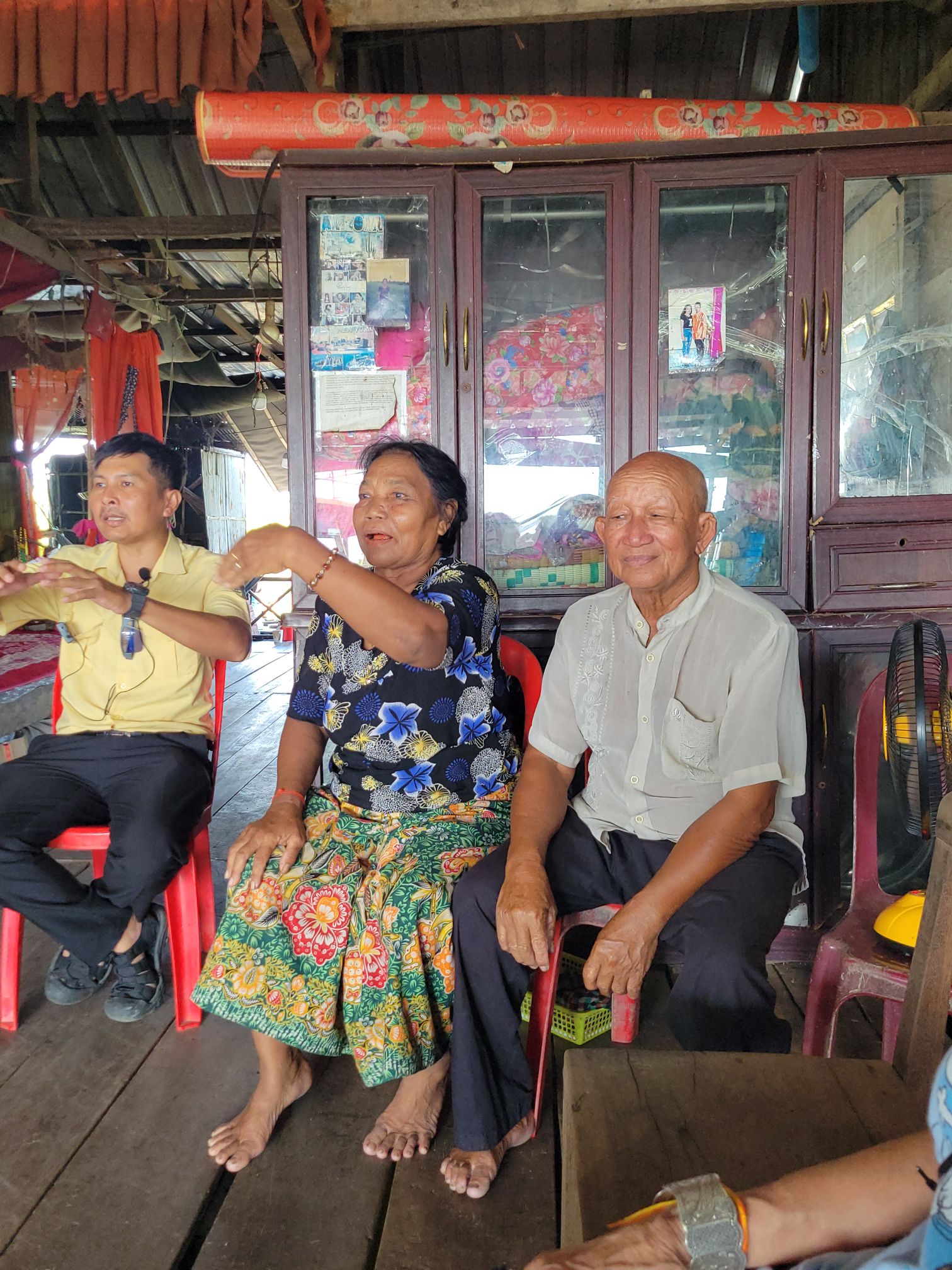

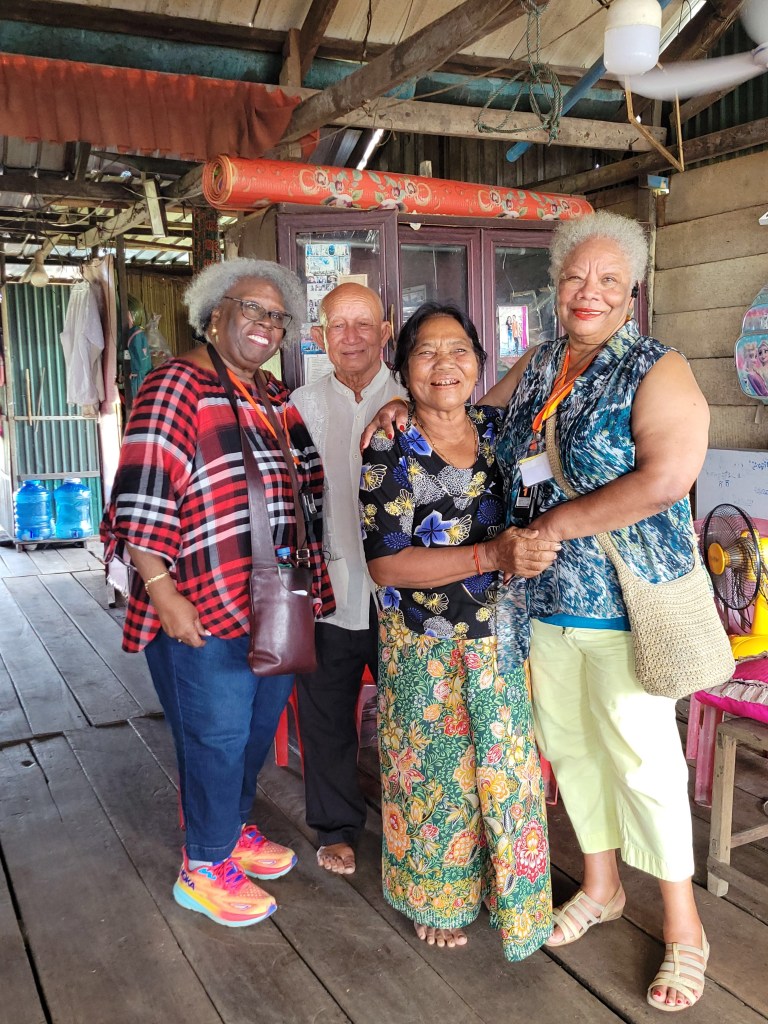


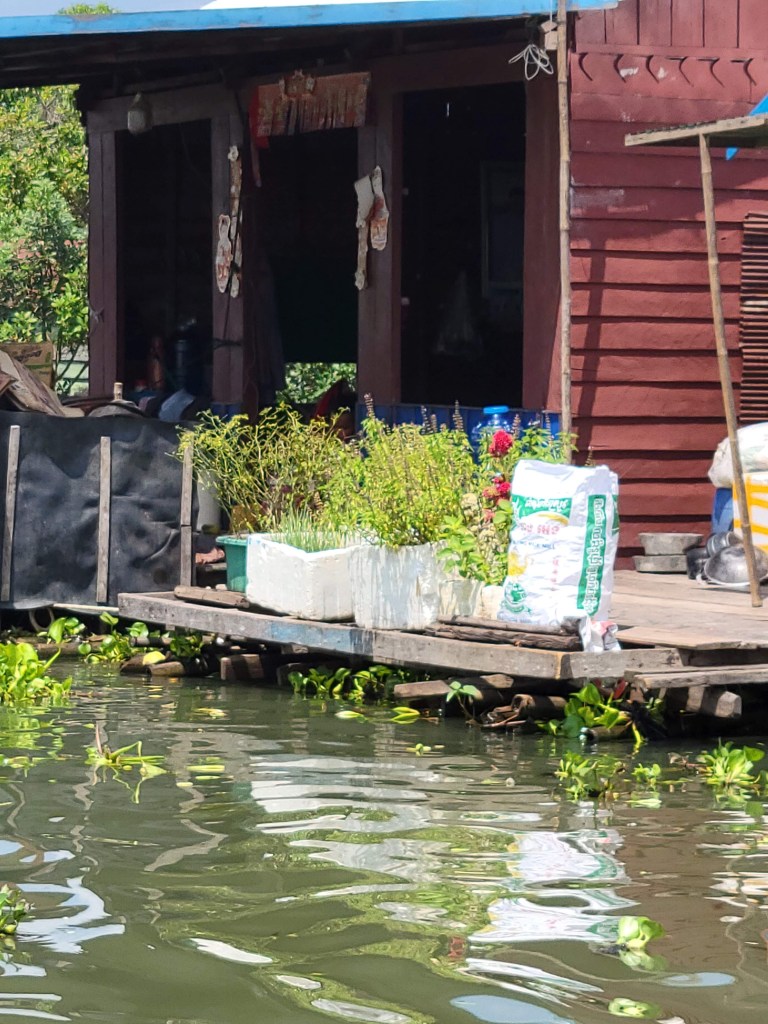
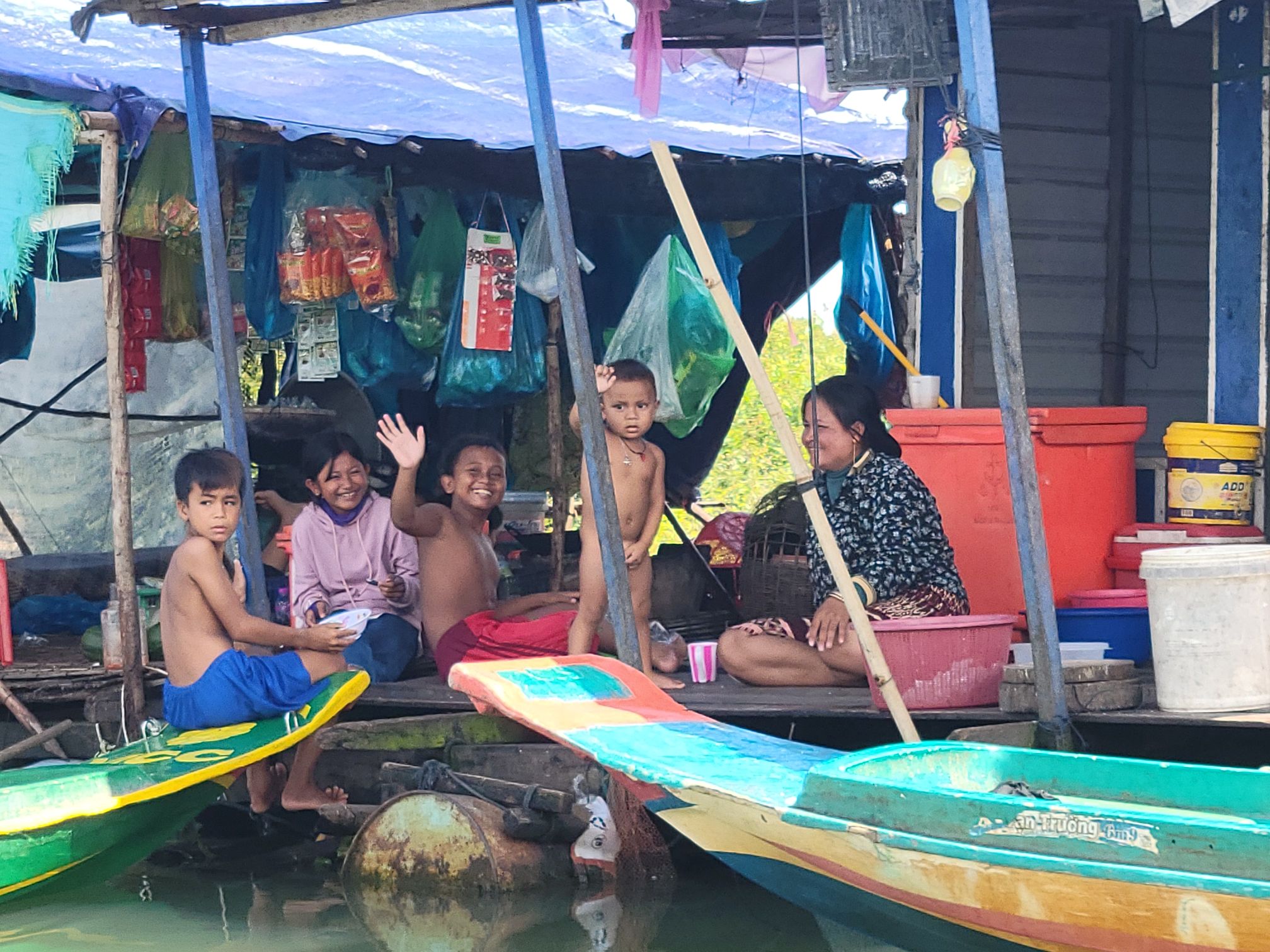

After leaving the village we had some free time to visit the Apopo Visitor Center to see and learn how HeroRats are helping to rid Cambodia of landmines. These rats originate from Africa and are trained to detect landmines. A job normally done by humans with detecting equipment is not only time consuming but dangerous. The rats are lighter weight therfore less likely to trigger an explosion. We were reminded that Cambodia was the most bombed country.

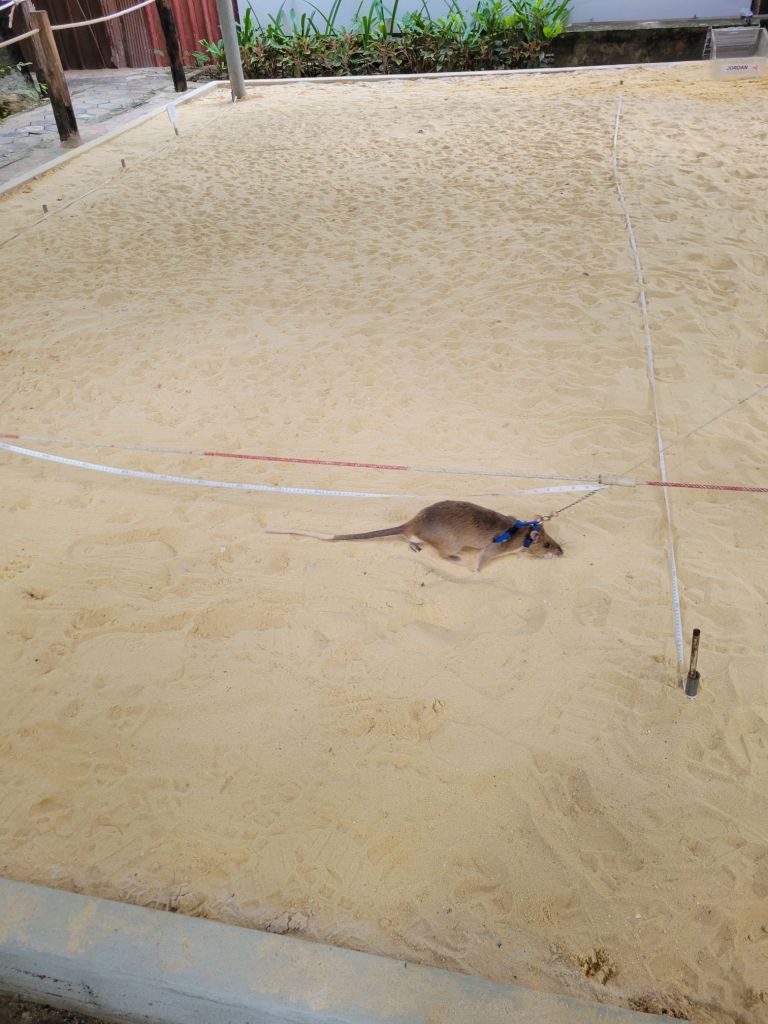
The rat is harnessed and allowed to move across the field. It is trained to detect smell of chemical compounds contained in the explosives: when it does it scratches the area to alert them that something might be there. From time to time one of the workers will make a click and the rat goes for a treat. These rats have been credited for saving many lives making lands safer for human beings to work and live.
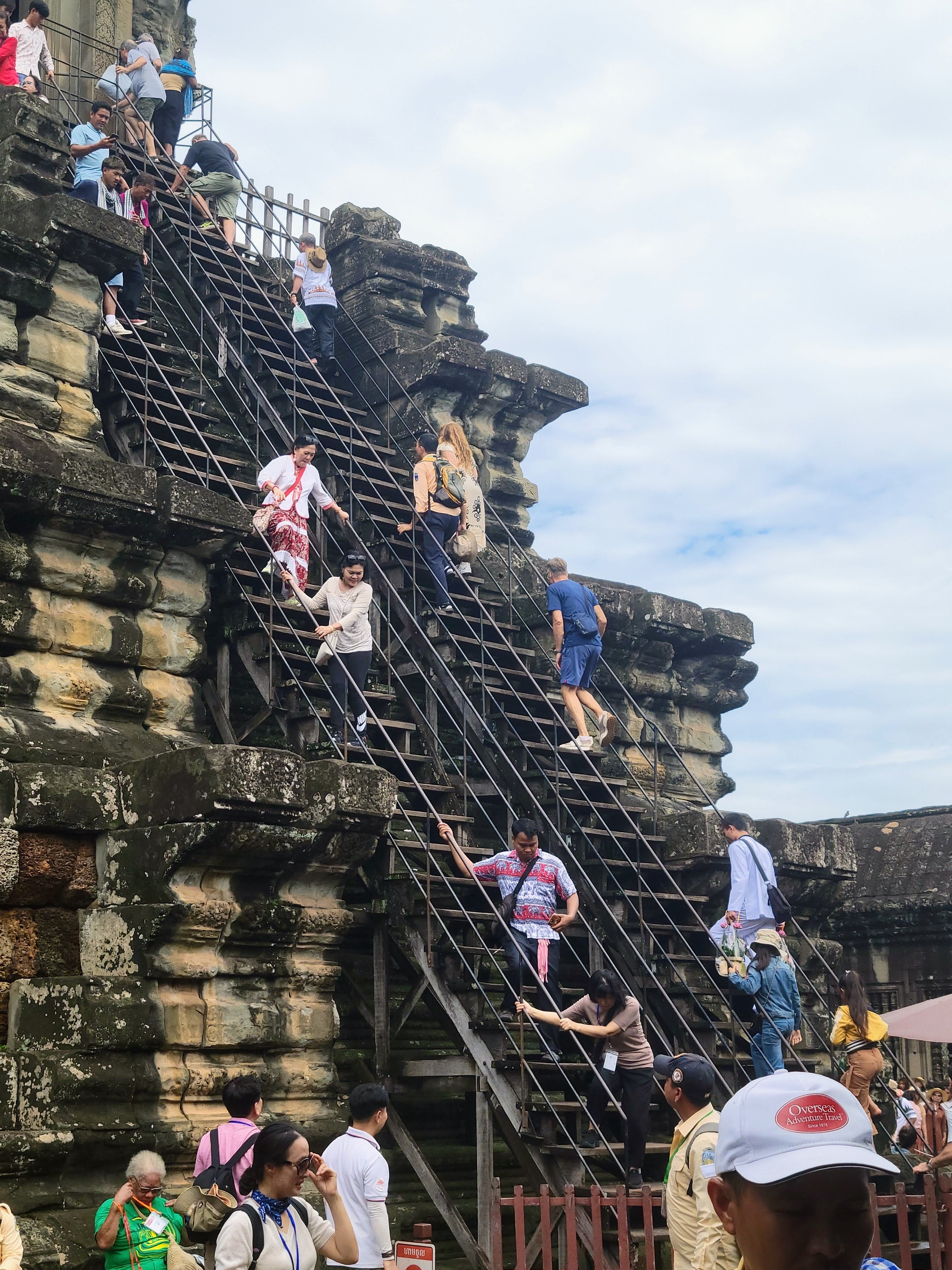
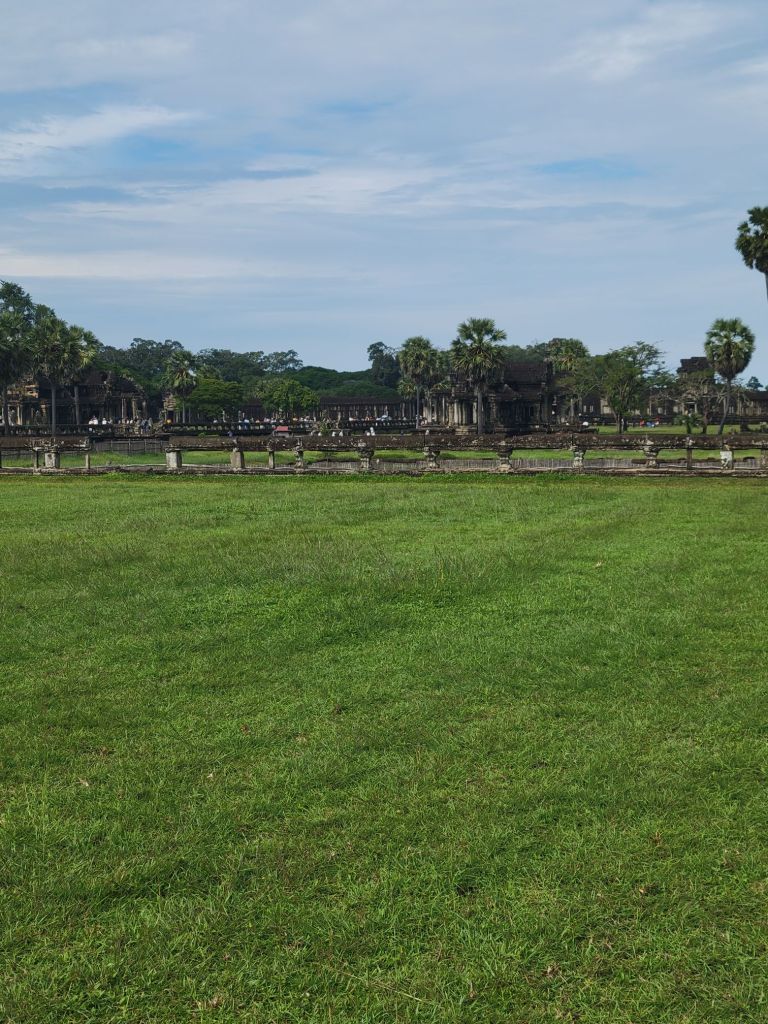
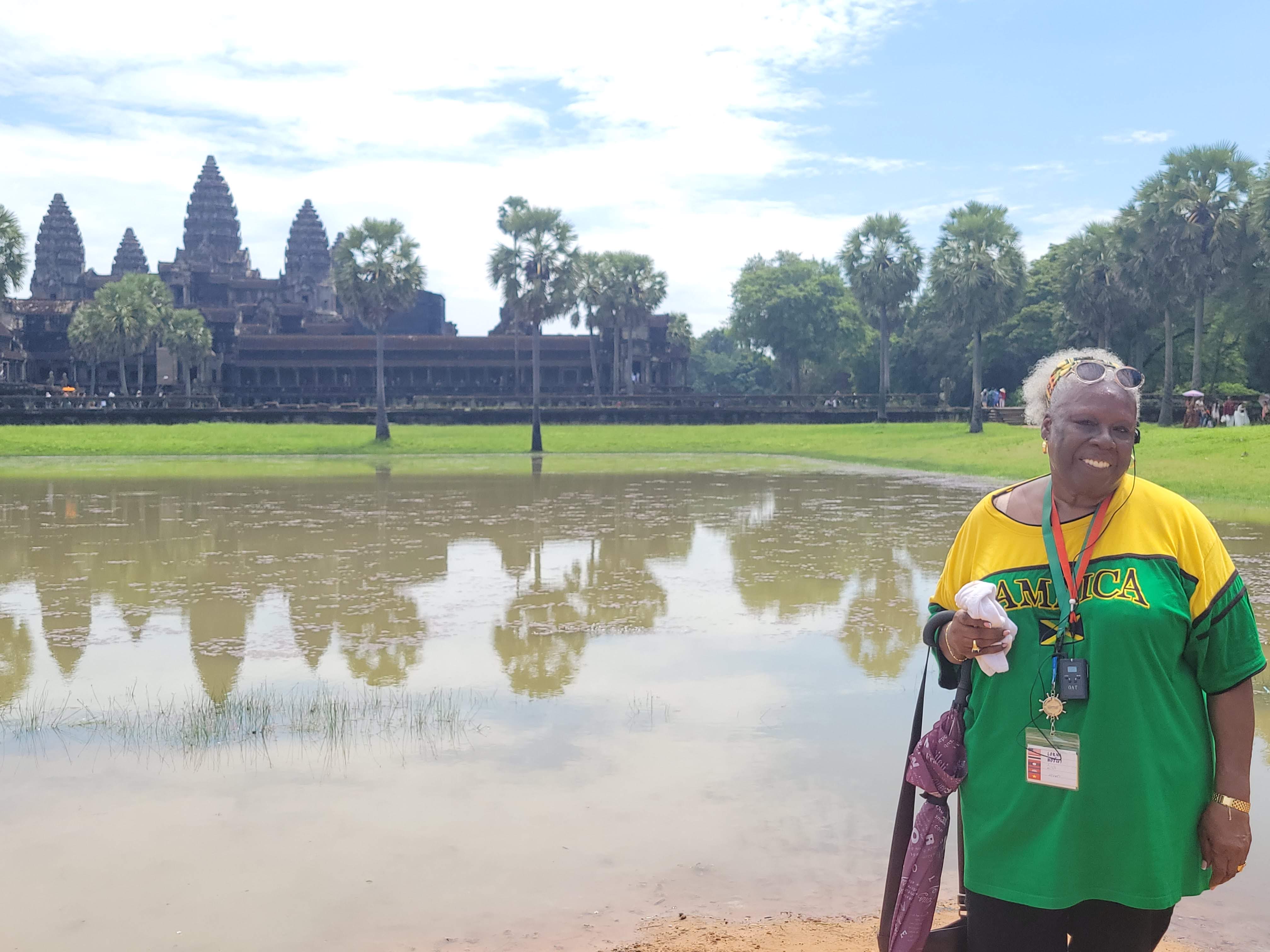
Angkor Wat was designated as a UNESCO World Heritage Site in 1992. It is a Hindu-Buddhist temple occupying 402 acres of land surrounded by a moat and a wall. It is said to be the largest Buddhist temple in the world.


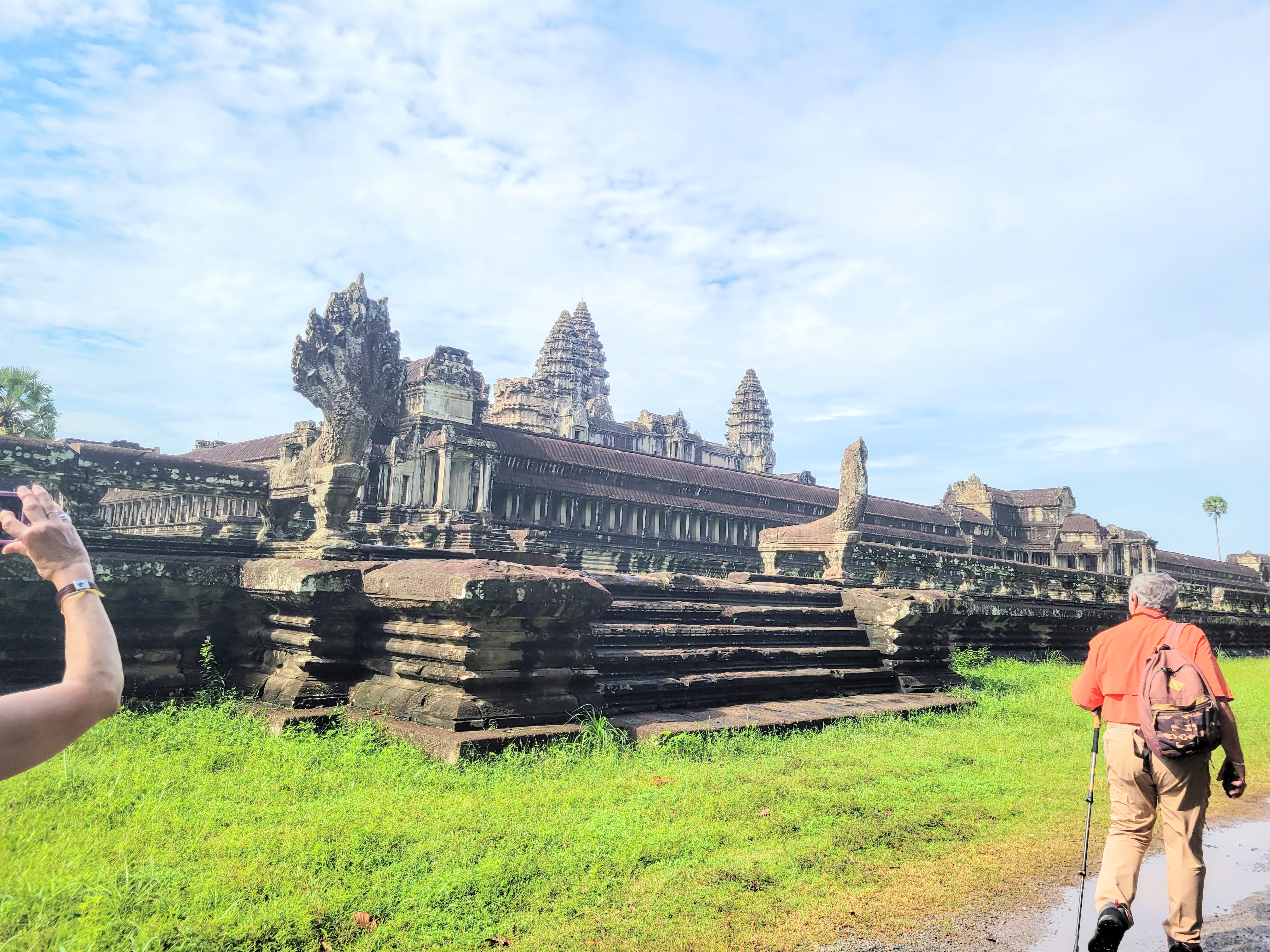

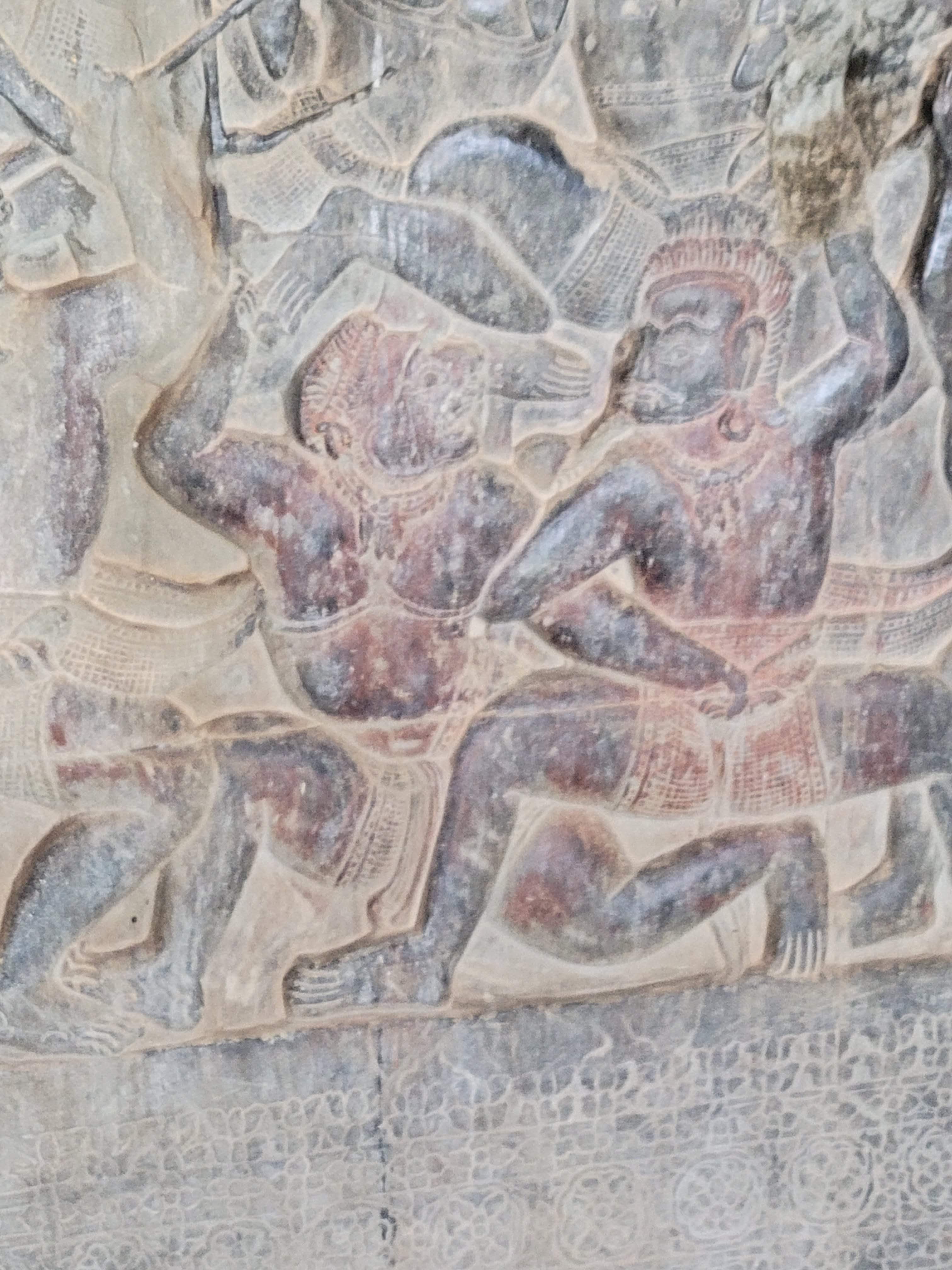
In the gallery of the second floor we viewed bas relief (sculptural technique) depicting historical customs and activities.




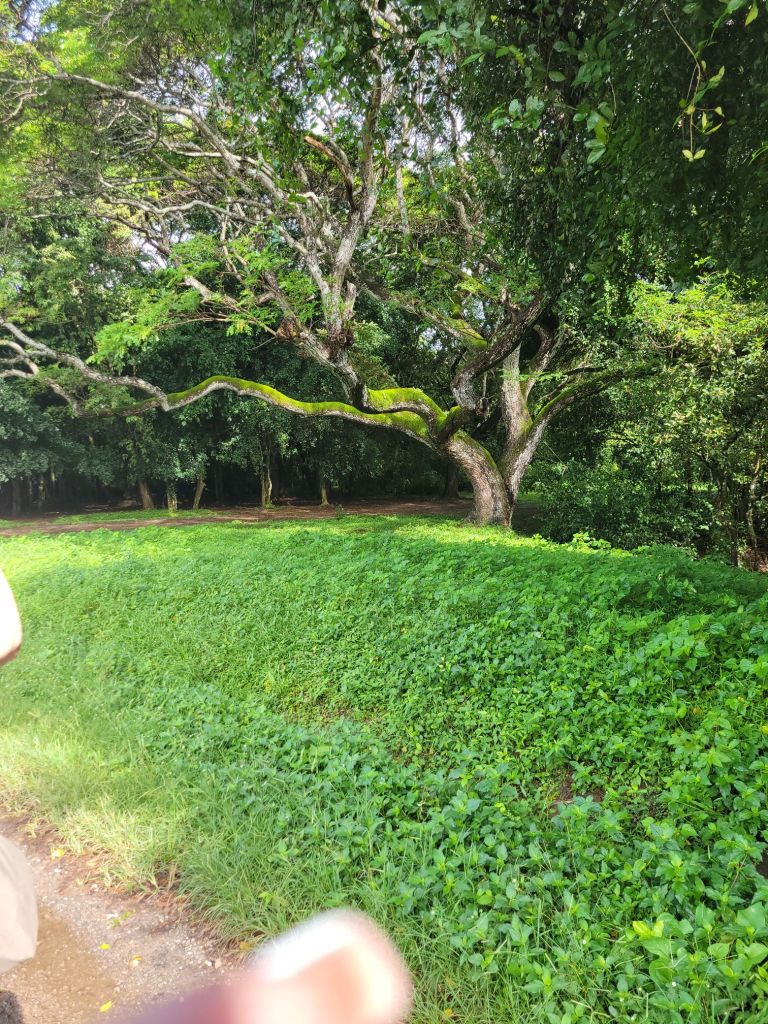

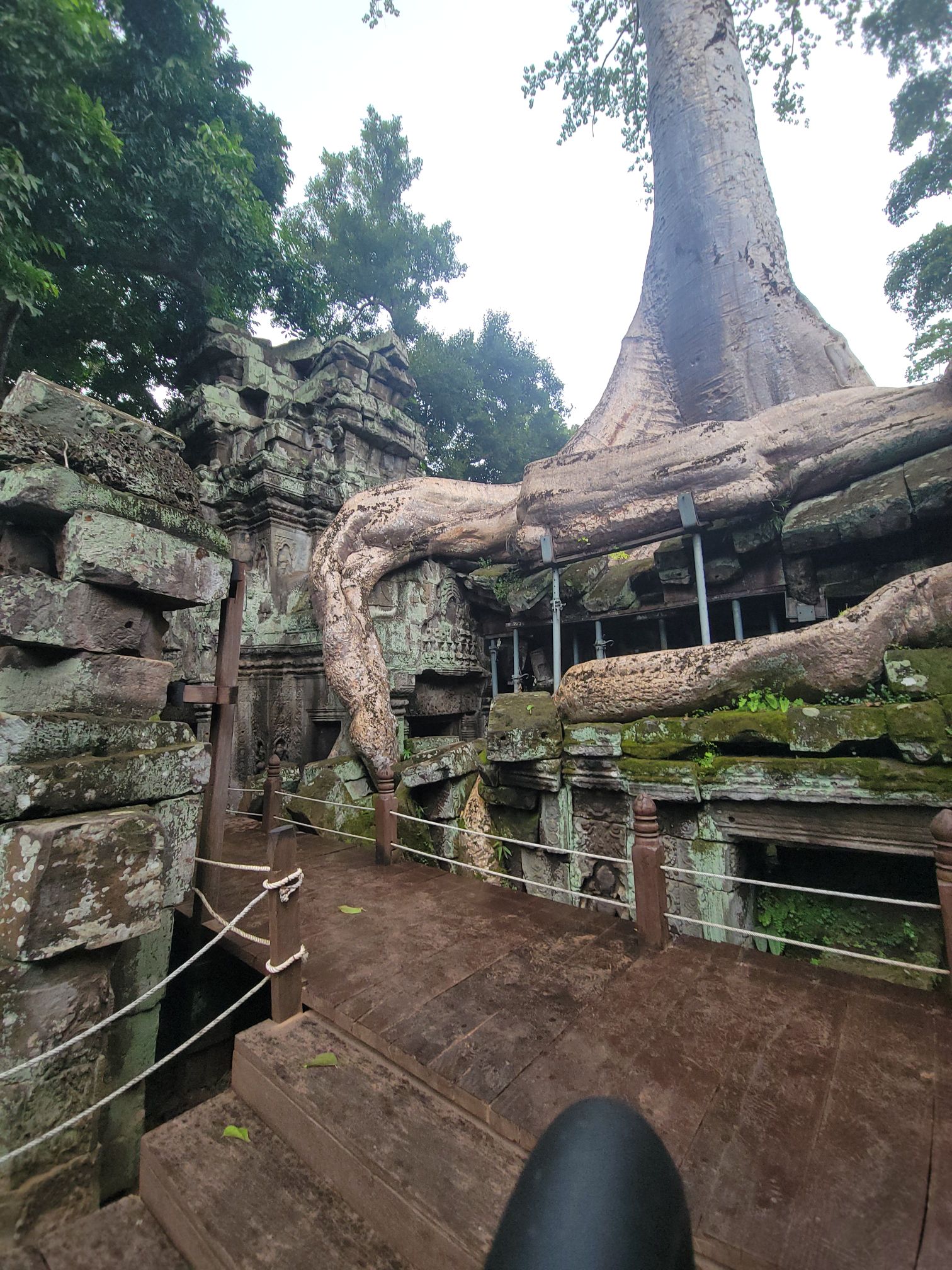
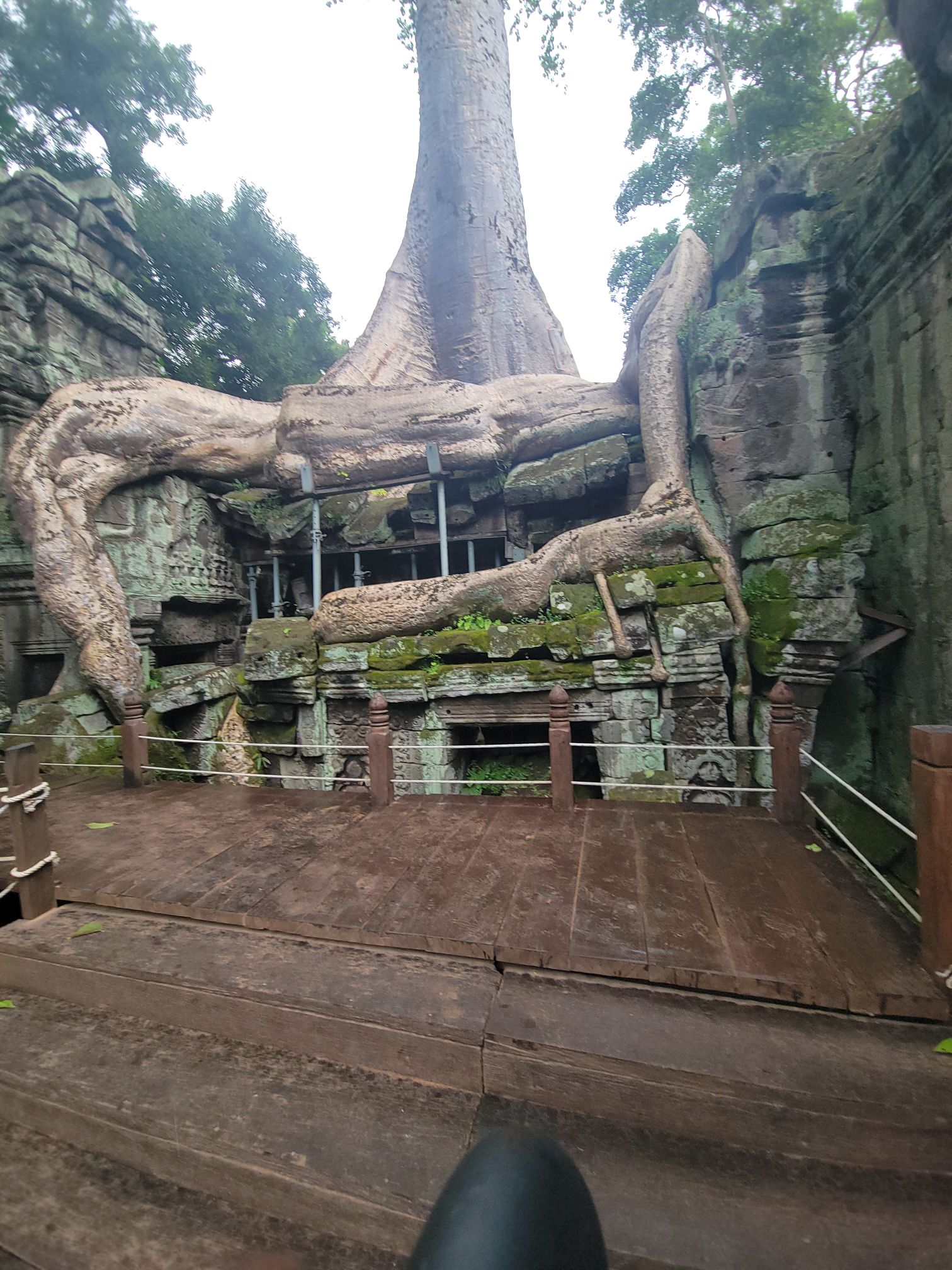
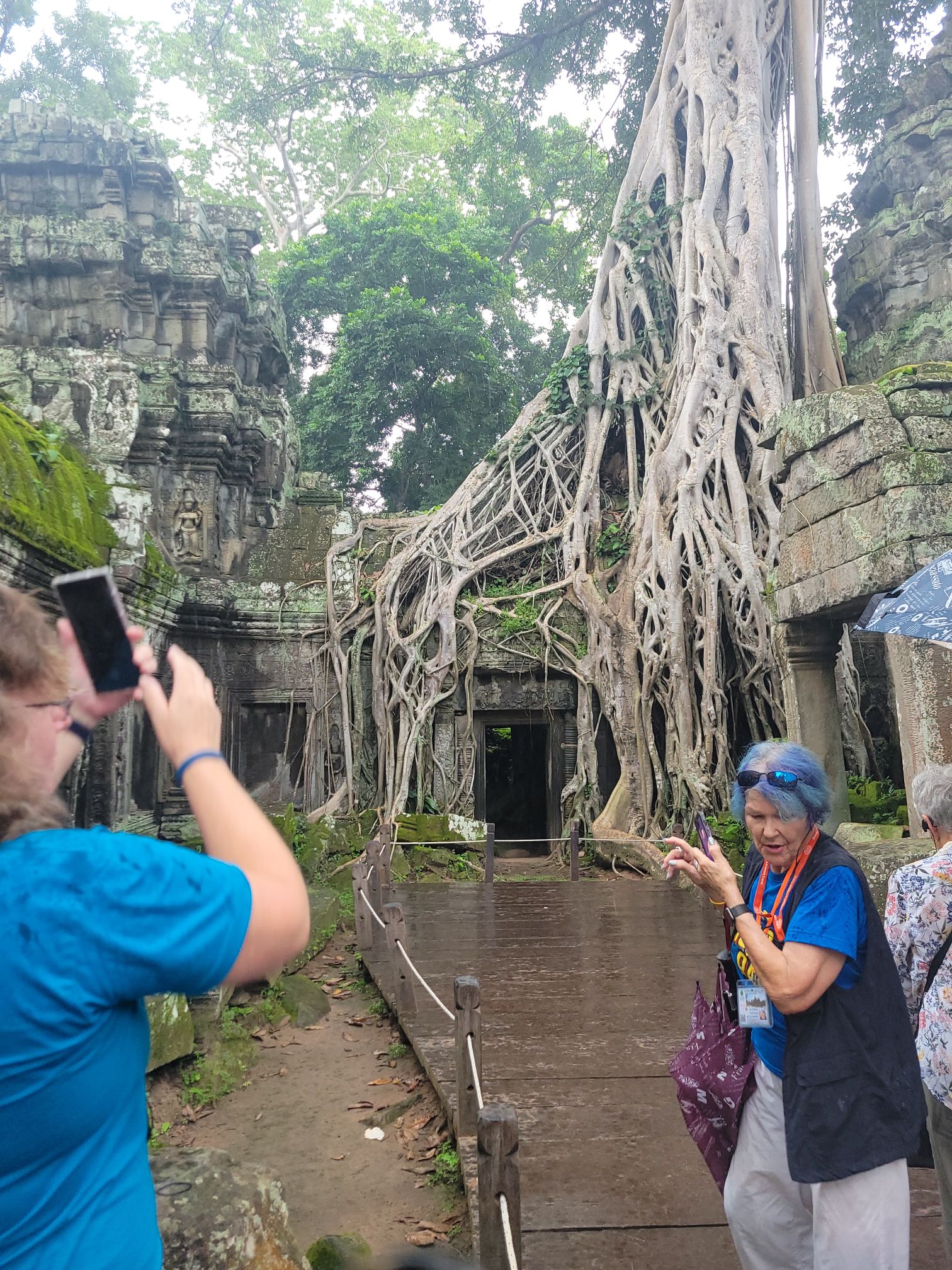
We also visited Ta Prohm temple. This temple was intertwined with enormous tree roots some stretching a long way from the tree as it runs along a reasonable length of the building.


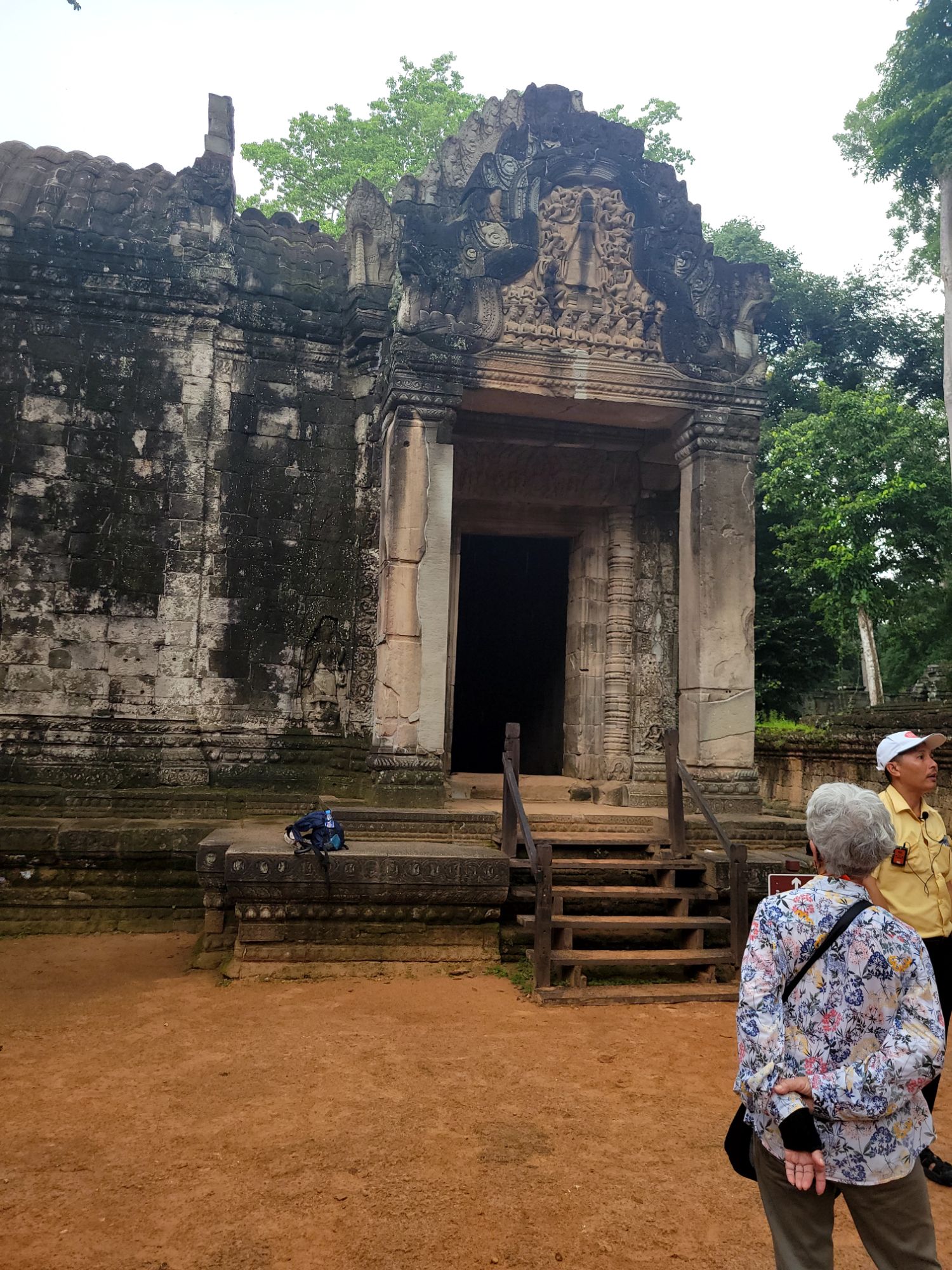
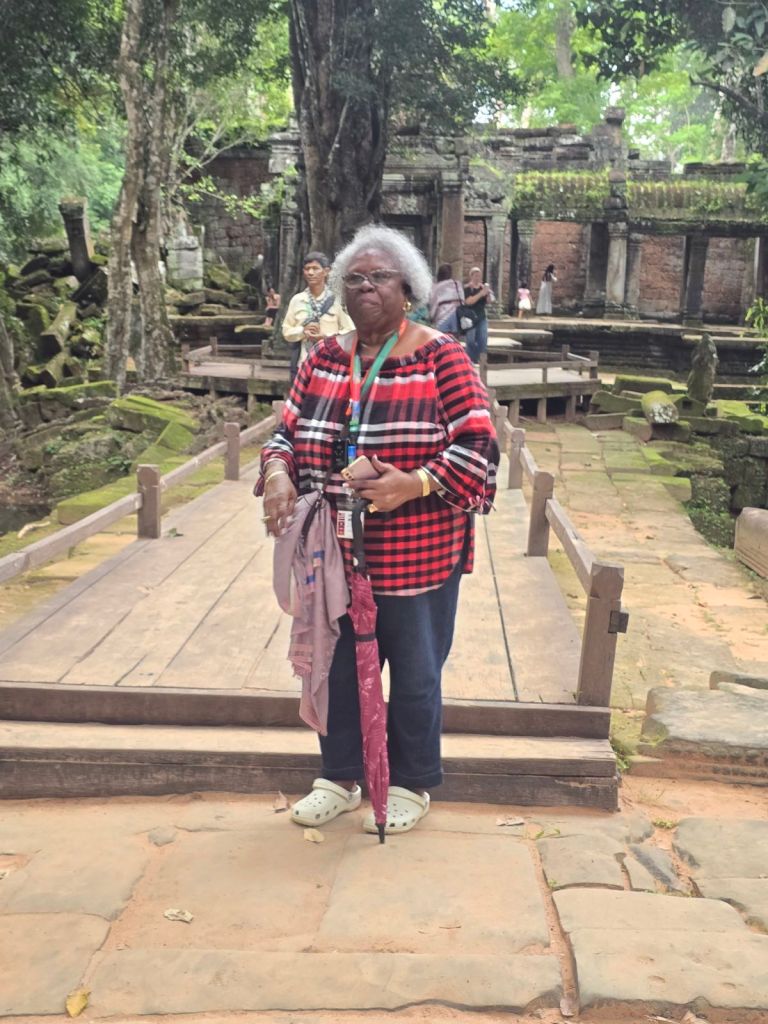
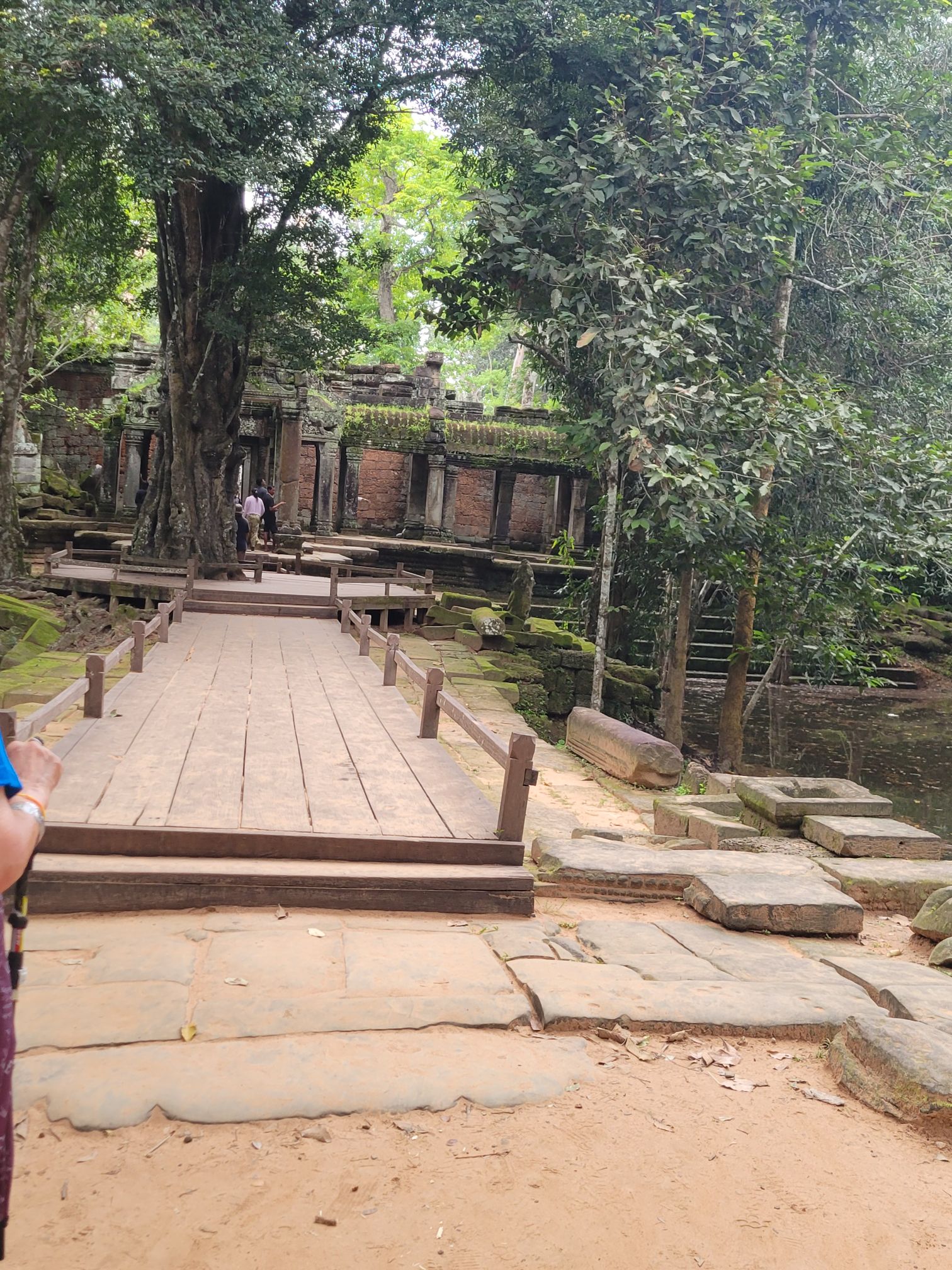
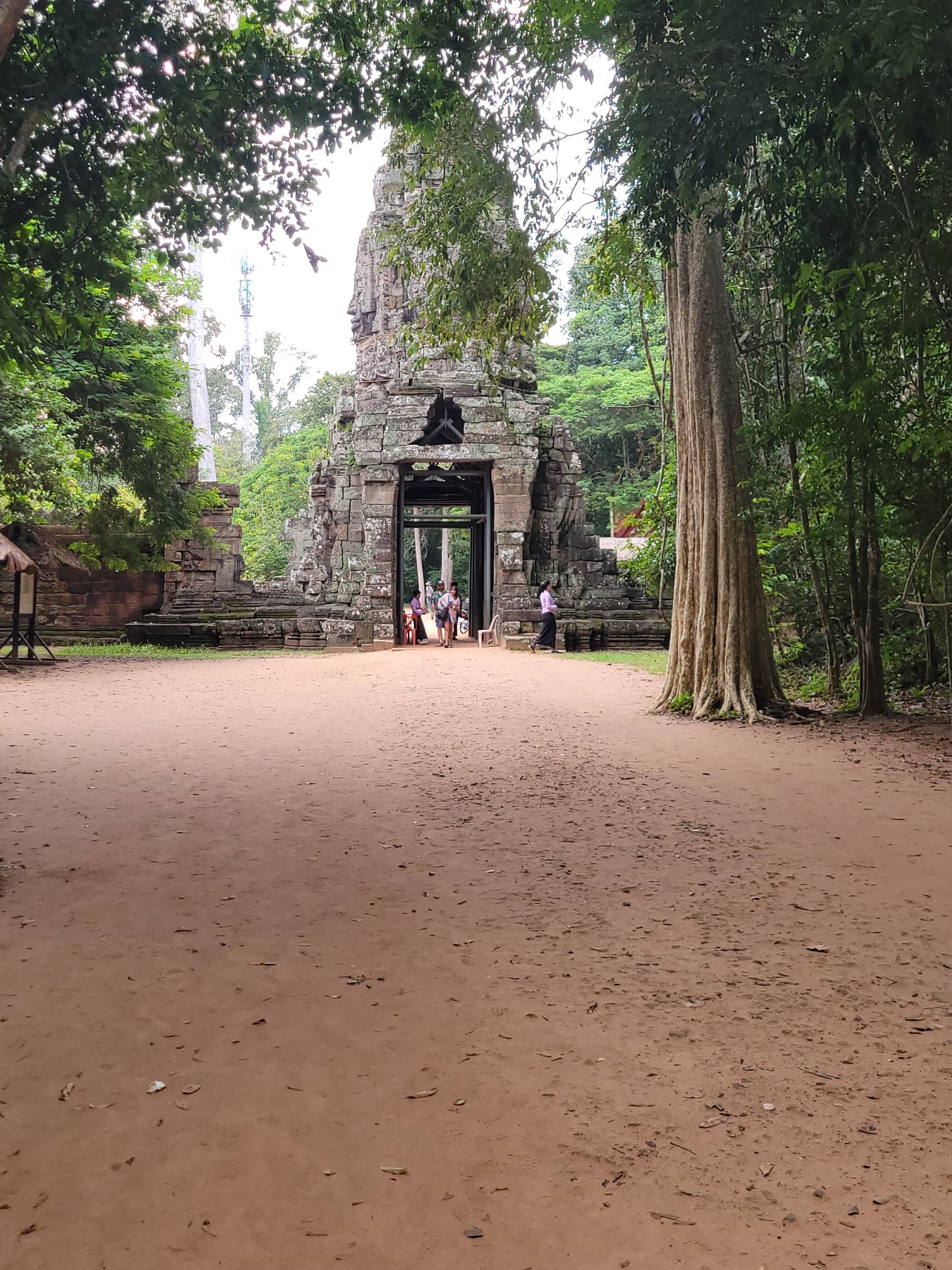
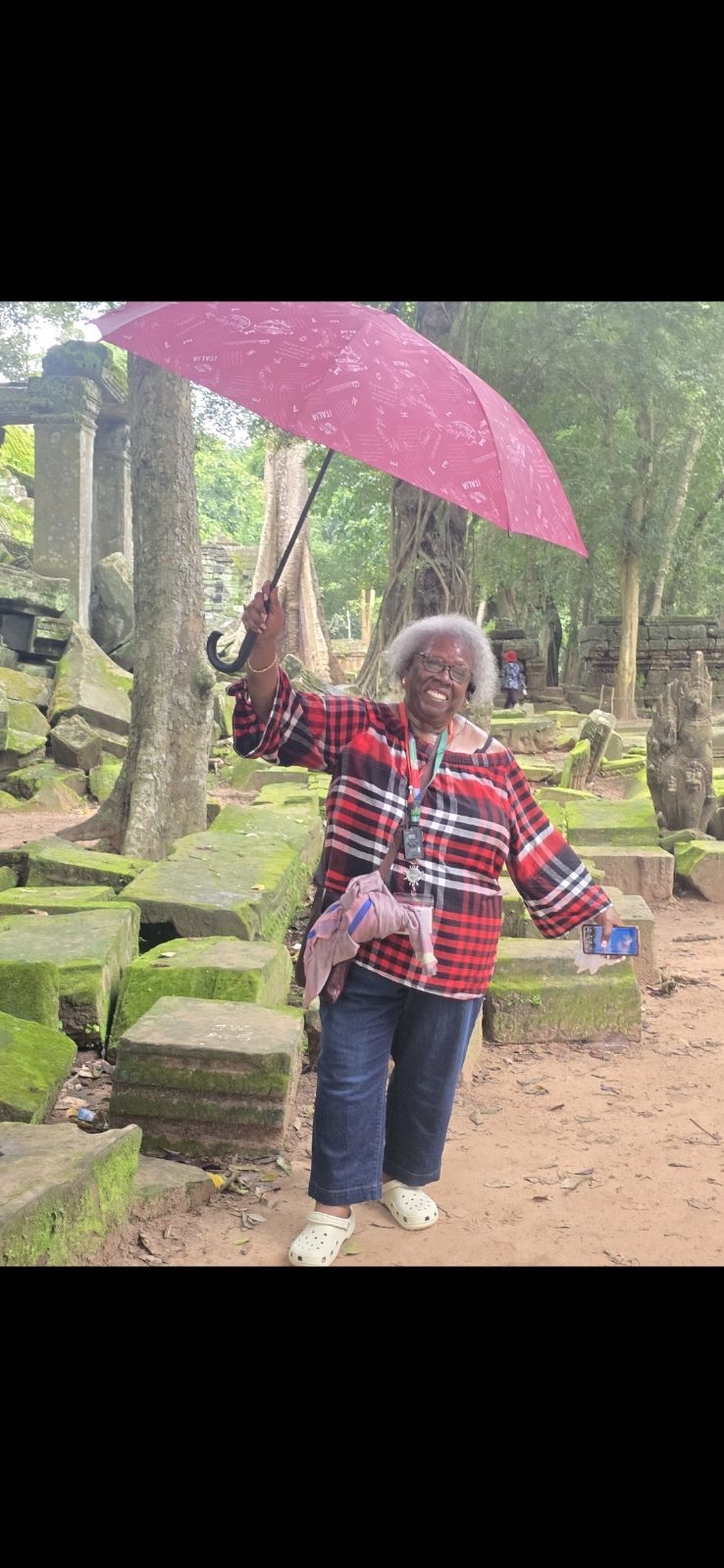
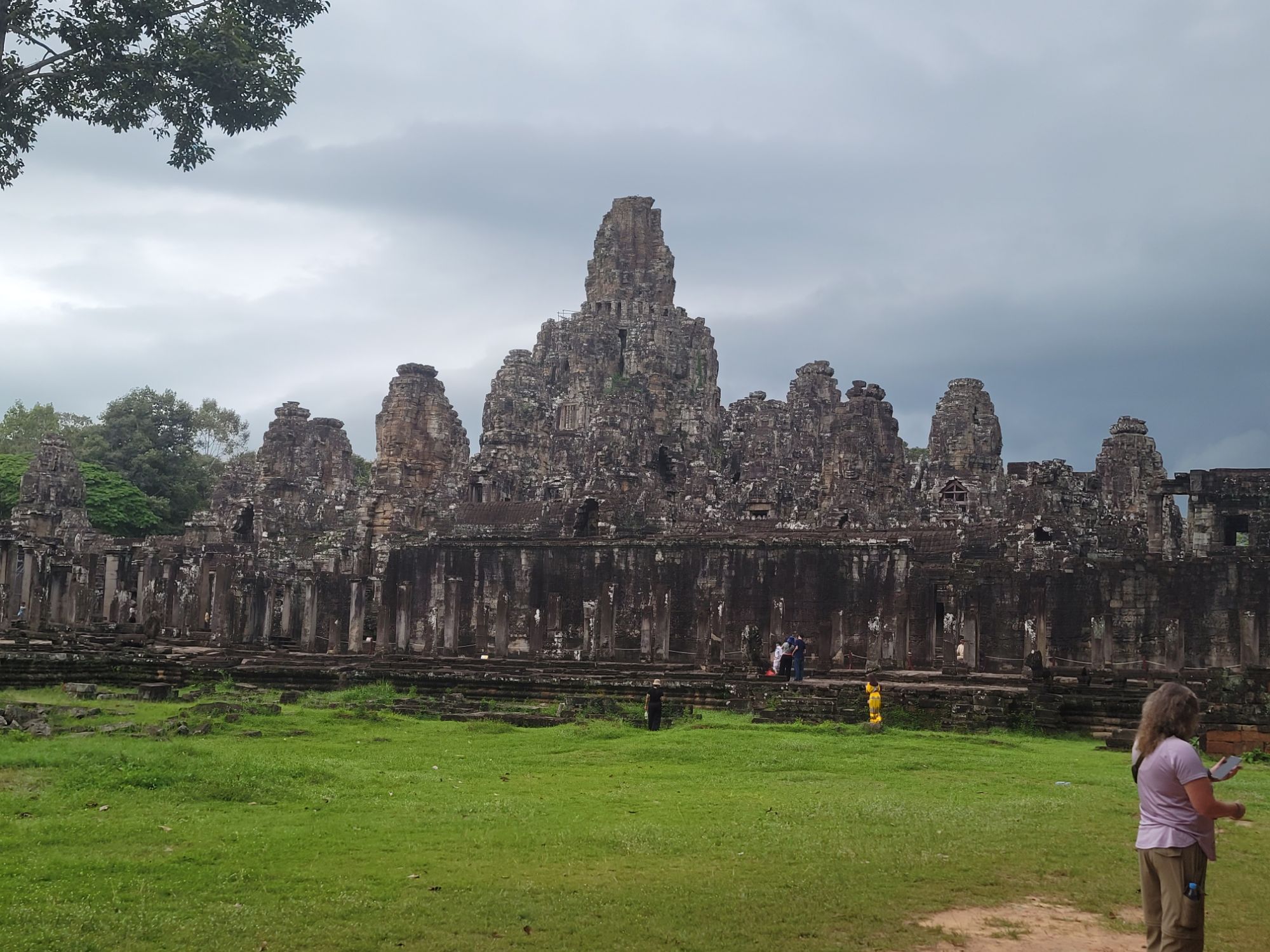
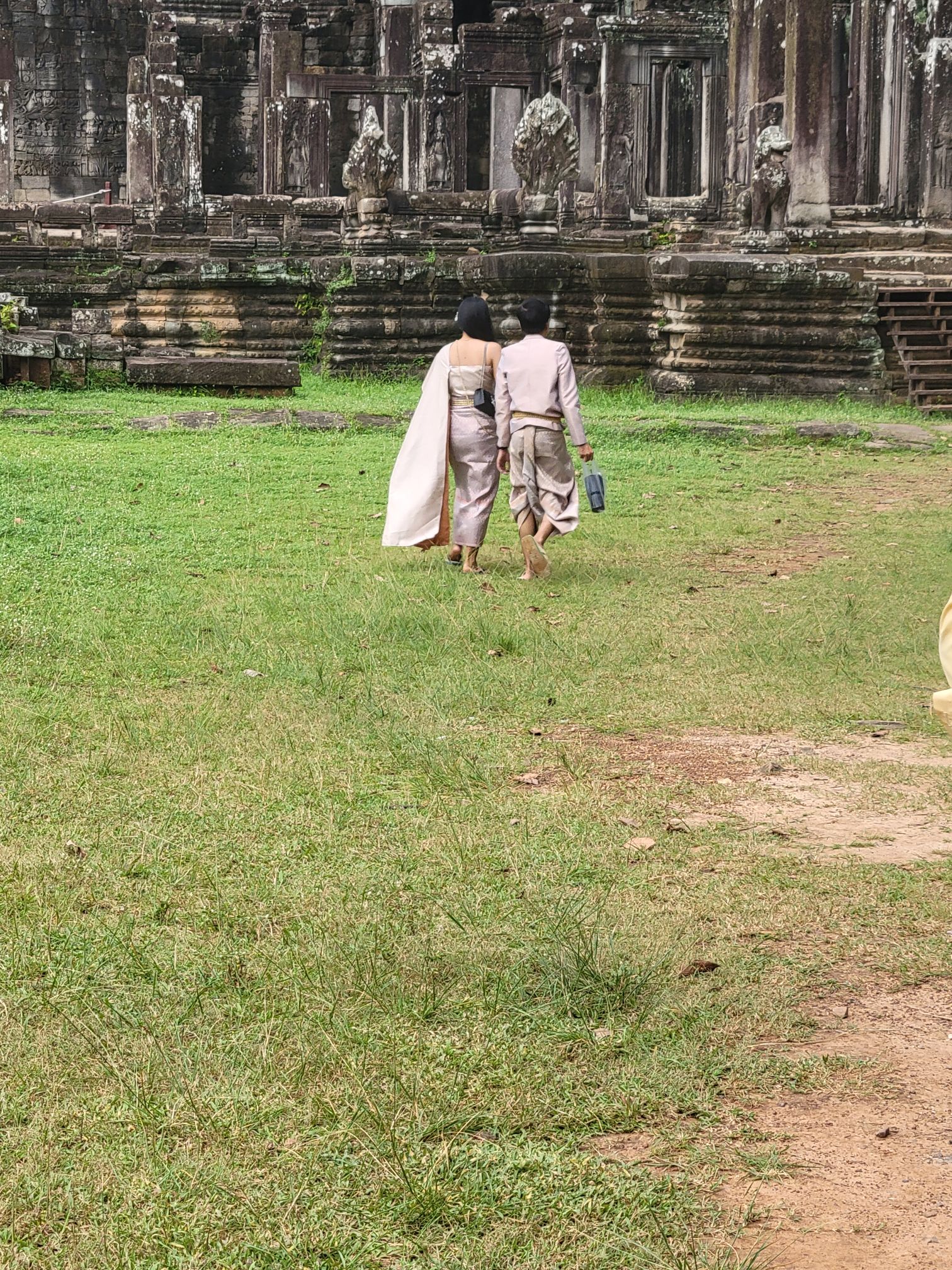
We also visited the ancient city of Angkor Tham, where the Bayan temple is located. Getting off the bus, you are bombarded with vendors. We just politely kept moving. Rain was expected, and we wanted to get the tour over as soon as possible. Here we saw some more Bas-relief (sculptural technique).
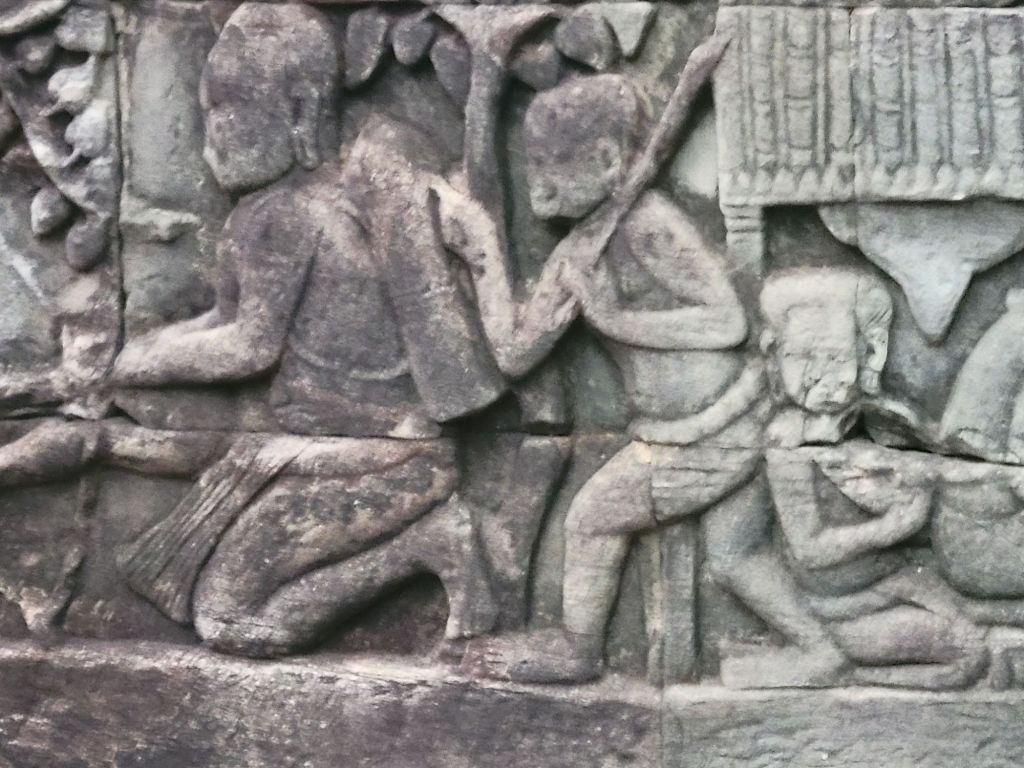



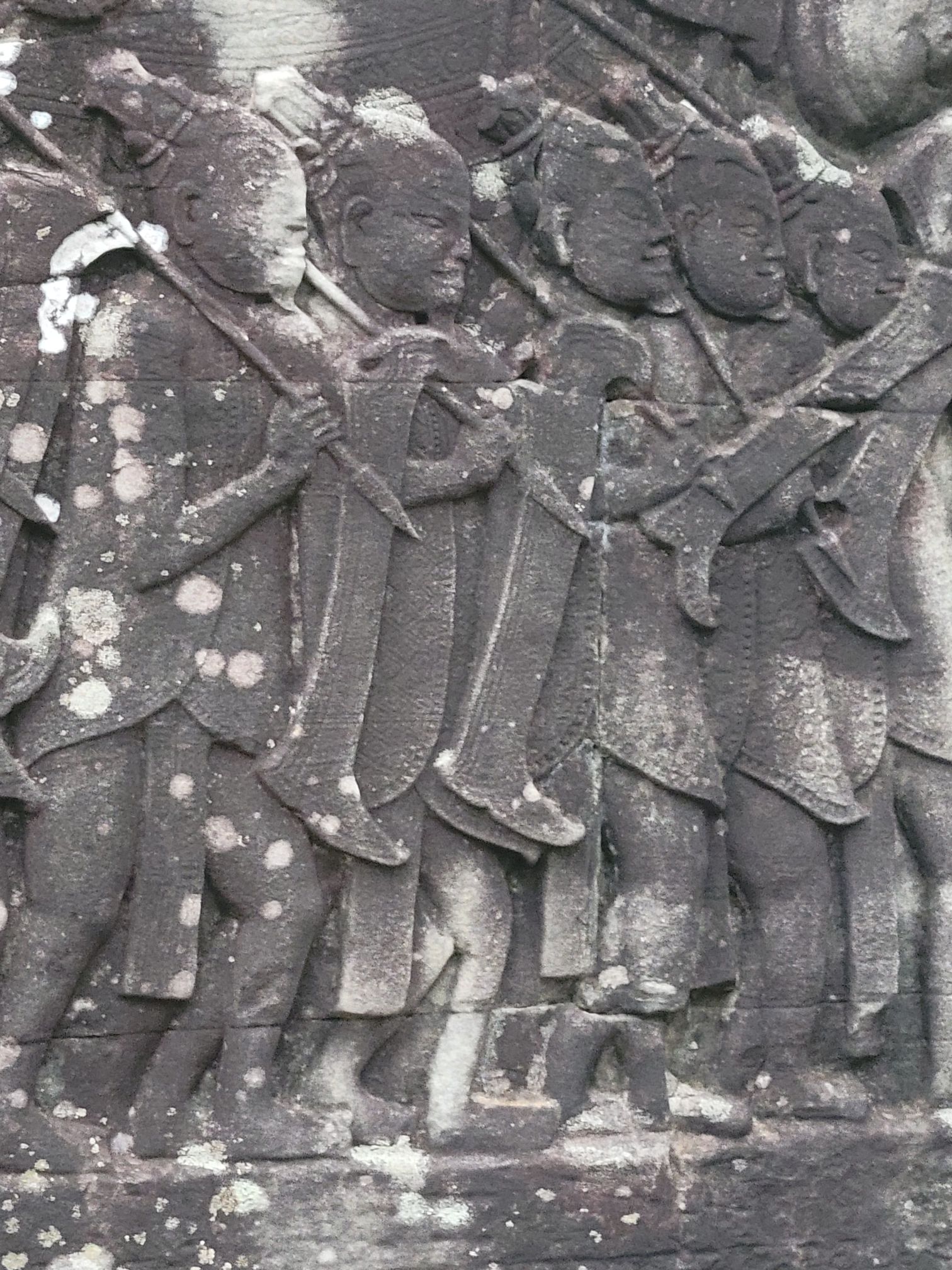
These tell the story of ancient happenings. So soon after our arrival there was a drizzle considering it was a good walk back to the bus I decided to return to the bus before the rain got heavier. Great decision because those that stayed behind, were soaked and had to walk through muddy puddles.

We had planned to return to Angkor Wat for a toast but the rain changed that. There is always plan B so we had our at the hotel. Our guides treated us to beverages and introduced us to some delicacies, which was a surprise learning and adventure.

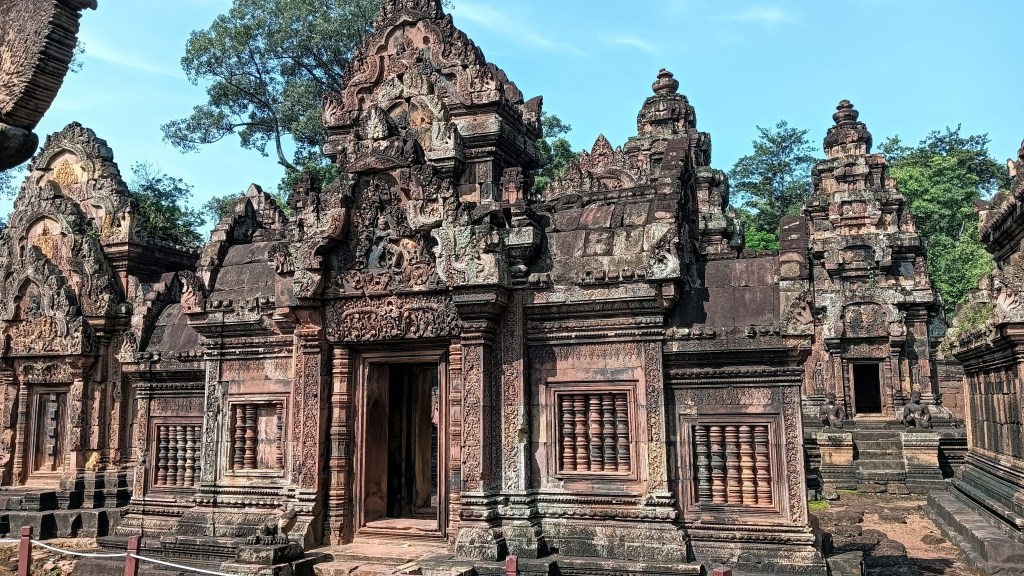
Some members of the group took an early morning trip to visit Banteay Srei temple which is one of the oldest and well preserved temples. Pictures shared here icredited to our trip leader.

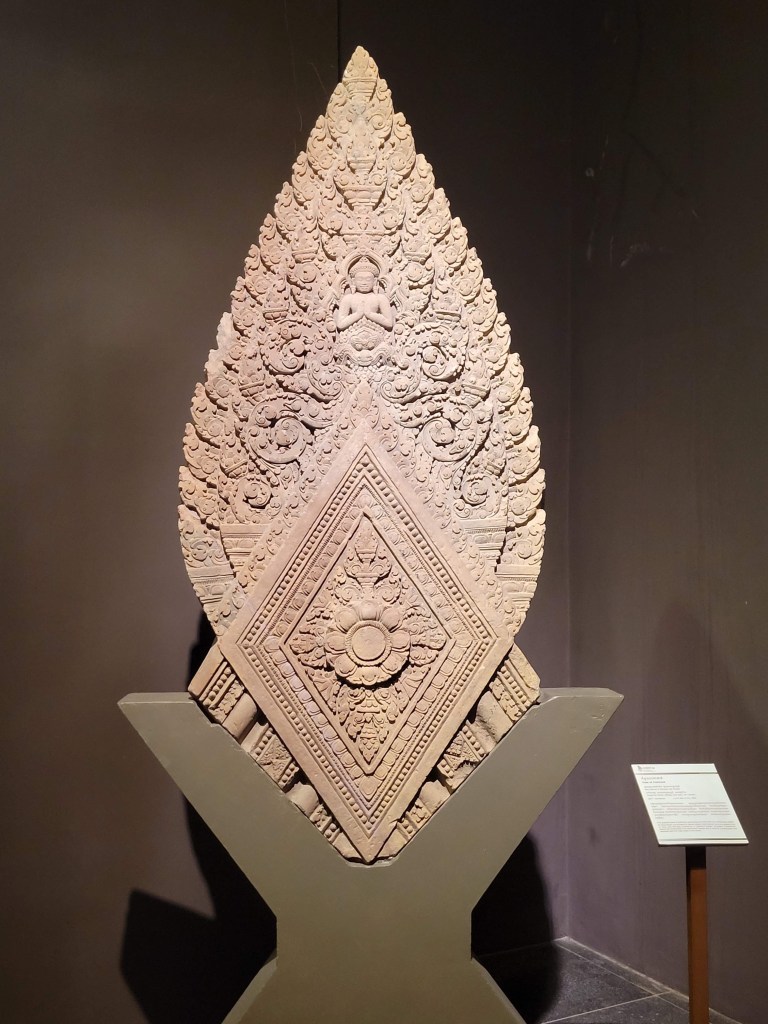
After a visit to the Angkor National Museum we were off to the airport heading to Vietnam. Please note no back packs or large bags they can be stored by assistants at the front of the building. Pictures without flash are allowed.



 Xlcrgirl's blog
Those pictures are so nostalgic, lovely, good reminders of my trip to lots of those places.Didn’t see any shots of the killing fields and its museum
LikeLiked by 1 person
You need to take a look at the post again. 😁😁
LikeLike
We’d a great trip in ’09 – really enjoyed Phnom Penn…
LikeLiked by 1 person
It really is a beautiful city.
LikeLiked by 1 person